
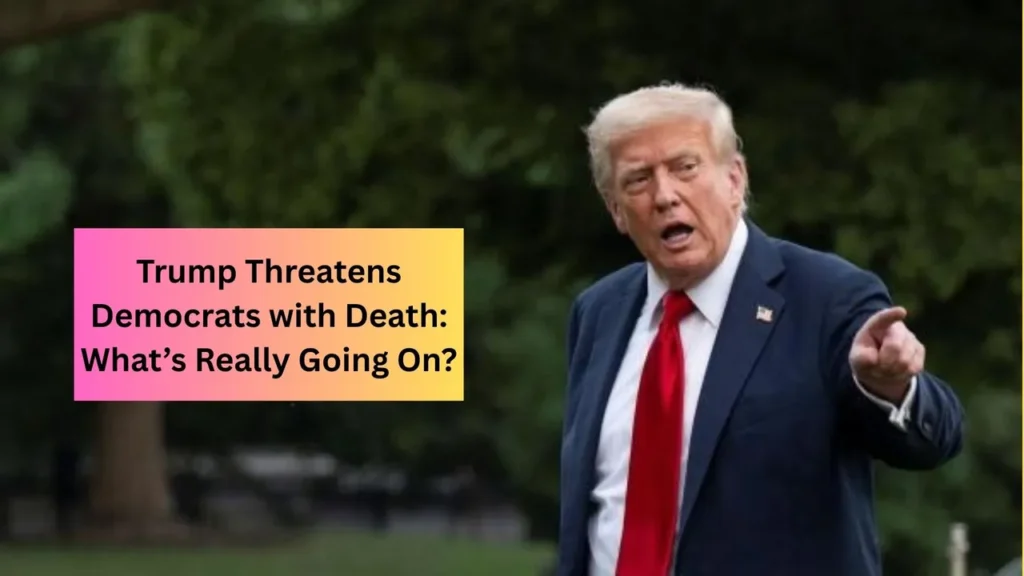
In a dramatic escalation of political rhetoric, Donald Trump has publicly accused a group of Democratic lawmakers of “seditious behavior … punishable by DEATH.” The statement has sent shockwaves through U.S. politics, raising serious questions about political violence, legitimacy, and the boundaries of free speech. Let’s unpack what happened, why it matters, and where things could go from here.
What Sparked the Controversy?
The Video That Triggered Trump
Six Democratic lawmakers — all veterans of the military or intelligence services — released a video addressed to U.S. service members. In it, they urged troops not to follow illegal orders, framing their message as a constitutional duty.
They ended the video with a stirring line: “Don’t give up the ship,” a metaphor borrowed from military history meant to evoke perseverance under pressure.
Trump’s Response: Arrests? Execution?
Trump reacted forcefully on his social media platform, Truth Social. He reposted a message calling the lawmakers “traitors” and demanding, “LOCK THEM UP???”
But the most explosive part came shortly afterward: in a second post, he wrote “SEDITIOUS BEHAVIOR, punishable by DEATH!”
He even amplified other users calling for the execution, quoting one who said, “HANG THEM GEORGE WASHINGTON WOULD !!”
How Are People Reacting?
Democratic Outrage
Democratic leaders condemned Trump’s remarks as beyond the pale. Senate Minority Leader Chuck Schumer said it was an explicit call for executing elected representatives — “deadly serious,” he warned.
House Democratic leaders reached out to Capitol Police and the U.S. Sergeant-at-Arms to ensure protection for the lawmakers named by Trump.
They issued a joint statement: “Political violence has no place in America … Trump must recant his violent rhetoric before he gets someone killed.”
Trump’s Defense: Was It Really a Threat?
When pressed to explain his language, Trump said he wasn’t literally advocating for execution. On a radio show, he claimed:
“In the old days, if you said a thing like that, that was punishable by death.”
He added that the Democrats were “in serious trouble,” but denied he was threatening their lives.
Legal and Military Experts Weigh In
The lawmakers’ video touched on a real legal gray area. Under the Uniform Code of Military Justice, members of the armed forces are required to disobey orders that are unlawful — but determining what is “unlawful” isn’t always easy.
Some legal scholars argue that Trump’s rhetoric could chill free speech or even incite political violence. Others warn that calling for death — even metaphorically — carries dangerous weight, especially from a sitting (or former) U.S. President.
Why This Matters: Bigger Than Just a Social Media Post
The Rise of Violent Political Rhetoric
Trump’s comments aren’t happening in a vacuum. They reflect a broader trend toward escalatory political speech, where opponents are not just criticized — they’re dehumanized, criminalized, or threatened.
Using “punishable by death” language against political rivals raises red flags about the normalization of violence in political discourse.
Threat to Democratic Norms
If political leaders routinely threaten their opponents with arrest or execution, it erodes trust in democratic institutions. Democracy relies on peaceful transition, debate, and tolerance — not political seesawing with life-or-death stakes.
Implications for Civil-Military Relations
The video at the heart of the backlash urged the military to resist “illegal orders.” That’s a bold call — and Trump’s counterattack plays into fears of using the military as a political tool. The tension here is about more than partisan politics; it’s tied to how much influence elected leaders should have over the armed forces.
What’s Next? What Could Happen
1. Legal Action or Investigation
- Some Democrats are already calling on law enforcement to investigate whether Trump’s posts amount to threats.
- Depending on interpretation, shouting “punishable by death” could be seen as incitement or a form of political violence.
2. Political Fallout
- House Republicans may face pressure to respond more forcefully.
- Voters, especially moderates, could become alarmed by the intensity of the rhetoric — and that could shift political dynamics.
3. Media & Public Debate
- Analysts and commentators will likely dig deeper into the legal history of sedition, the role of political violence in democracy, and whether this represents a new low point in American political discourse.
- Civil society may demand stronger norms or even legal reform around threatening language by public officials.
Why Trump Might Be Doing This
Rallying His Base
Strongman language and appeals to “law and order” have long energized Trump’s core supporters. By calling out Democrats so forcefully, he may be doubling down on his populist, confrontational identity.
Reasserting Power
Even if he claims the death comment was metaphorical, the sheer force of the phrase helps him dominate the conversation. It’s a way of signaling that he’s not afraid to go nuclear rhetorically — no pun intended.
Shifting the Narrative
By framing the Democrats’ video as seditious, Trump turns the focus from his own actions (or policies) to “traitors” in Congress. This could be a strategic pivot to reframe political conflict in his terms.
But There Are Risks — Big Risks
- Backlash and Isolation: If moderate Republicans or independents view this as going too far, it could alienate key parts of the electorate.
- Security Consequences: Threatening comments against public officials can escalate real-world violence or endanger those targeted.
- Legal Repercussions: Even if not criminal, rhetoric like this could lead to reputational damage, congressional censure, or other political costs.
- Erosion of Norms: More importantly, repeated threats of capital punishment undermine democratic norms and could make political violence more acceptable in the long run.
Conclusion
Donald Trump’s threat that Democratic lawmakers’ behavior is “punishable by death” is more than a provocative social media post — it’s a serious moment in U.S. political discourse. Whether you interpret his words as metaphorical or literal, the impact is profound: it raises alarms about political violence, risks normalizing extreme rhetoric, and challenges the very foundations of democratic debate.
This episode underscores a troubling trend, where opponents aren’t just defeated in elections or criticized — they’re criminalized and threatened. For democracy to survive, leaders on all sides — and citizens too — need to draw a line. Threats of violence should not become routine in political disagreements.
FAQs
1. Is Trump’s “punishable by death” comment legally actionable?
Possibly. While free speech protections are broad, threats against individuals — especially elected officials — can cross into illegal territory, depending on context, intent, and whether they incite violence.
2. What does “seditious behavior” mean under U.S. law?
Sedition generally refers to conduct or speech encouraging rebellion against the authority of the state. But applying it to civilians (especially elected lawmakers) is complex and rare.
3. What did the Democratic lawmakers actually say in their video?
They urged military and intelligence personnel to refuse orders they believe to be illegal, citing constitutional duty.
4. Why is this particularly dangerous for democracy?
Because framing political opponents as traitors deserving death undermines the principle of peaceful political competition. It increases polarization and risks encouraging political or physical violence.
5. What can be done to hold leaders accountable for violent or threatening rhetoric?
Possible responses include congressional hearings, public condemnation, legal investigations if there’s evidence of incitement, and reinforcing norms that political speech should not escalate to threats.