
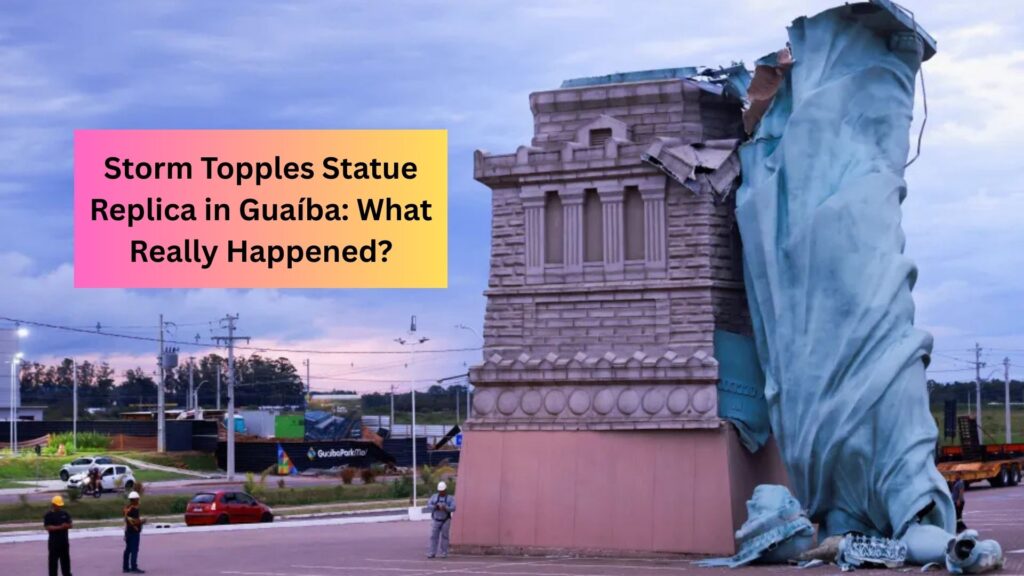
When nature decides to show its power, even symbols meant to stand tall can come crashing down. That’s exactly what happened in Guaíba, Rio Grande do Sul, when a 78-foot Statue of Liberty replica collapsed during a powerful storm. Within hours, dramatic videos flooded social media, leaving people stunned, curious, and asking the same question: How did something so massive fall so fast?
Let’s break it all down—what happened, why it happened, and what this incident teaches us about weather, infrastructure, and viral moments in the digital age.
The Incident That Shocked Brazil
A Calm Day Turns Chaotic
What began as an ordinary day in Guaíba quickly turned into a scene straight out of a disaster movie. Strong winds swept through the region, rattling buildings, uprooting trees, and eventually toppling the towering Statue of Liberty replica.
The moment the statue collapsed, someone caught it on camera—and that changed everything.
The Moment Caught on Camera
The viral videos show the statue swaying, almost like it’s struggling to keep balance, before finally giving in to the force of the wind. In seconds, the iconic structure crashes down, sending dust and debris into the air.
It’s dramatic. It’s shocking. And it’s hard to look away.
Understanding the Statue of Liberty Replica
What Was This Statue?
The statue wasn’t just a random structure. It was a 78-foot replica of the Statue of Liberty, a familiar landmark for locals and a popular attraction for visitors.
While it didn’t carry the same historical weight as the original in New York, it still held symbolic and visual importance in the area.
Why Guaíba Had a Liberty Replica
Cities around the world often install replicas of famous monuments to attract tourism or add character to public spaces. Guaíba’s Statue of Liberty replica served exactly that purpose—a recognizable symbol standing tall against the skyline.
Until the storm arrived.
The Power of the Storm Winds
How Strong Were the Winds?
Storm winds in southern Brazil can be brutal, and this one was no exception. Reports described powerful gusts strong enough to damage structures and knock down large objects.
Think of it like trying to hold an umbrella during a cyclone—it doesn’t matter how tight your grip is; eventually, the wind wins.
Why Wind Is More Dangerous Than It Looks
Wind doesn’t need to “hit” something to destroy it. Constant pressure, combined with sudden gusts, creates stress on structures. Over time—or even minutes—that stress can cause failure.
In this case, the statue simply couldn’t hold on any longer.
Structural Questions After the Collapse
Was the Statue Built to Withstand Storms?
This is the big question everyone is asking. Large outdoor structures should be designed to handle extreme weather, especially in storm-prone regions.
The collapse raises concerns about:
- Construction quality
- Foundation strength
- Maintenance checks
- Wind-load resistance
Maintenance: The Silent Factor
Even strong structures weaken over time. Rust, material fatigue, and lack of inspections can turn a solid-looking monument into a ticking time bomb.
Sometimes, what looks sturdy on the outside is already fragile within.
Viral Videos and Social Media Reaction
How the Internet Reacted
Once the videos hit social media, reactions poured in from around the world. Some people were shocked, others amazed, and a few even made dark humor comments—because that’s the internet.
But one emotion dominated: disbelief.
Why These Videos Went Viral So Fast
Viral content usually checks three boxes:
- Visually dramatic
- Unexpected
- Easy to understand
This incident ticked all three. You don’t need context to understand a giant statue falling over. The image speaks for itself.
No Injuries: The Biggest Relief
Why This Matters Most
Amid all the shock and noise, there was one piece of good news that truly mattered—no injuries were reported.
Considering the size of the statue and the force of the collapse, this outcome feels almost miraculous.
Timing and Location Saved Lives
Fortunately, the area around the statue was not crowded at the time. Whether by luck or planning, no pedestrians were nearby when it fell.
Sometimes, safety comes down to timing.
Local Authorities Respond
Immediate Action Taken
After the collapse, local authorities quickly secured the area to prevent further risk. Debris was cleared, and inspections began almost immediately.
Public safety became the top priority.
Investigations Into the Cause
Officials are expected to review:
- Structural design documents
- Weather data
- Maintenance history
The goal is simple: prevent this from happening again.
Weather Extremes in Rio Grande do Sul
Is Extreme Weather Becoming More Common?
Southern Brazil has experienced increasingly unpredictable weather patterns in recent years. Stronger storms, heavier rains, and intense winds are becoming less rare.
This incident fits into a broader pattern of extreme weather events.
Climate Change and Infrastructure Stress
While one event doesn’t prove a trend, repeated incidents like this highlight a growing issue—infrastructure built for the past may not survive the future.
It’s like wearing a raincoat designed for drizzle in the middle of a thunderstorm.
Public Safety and Urban Planning Lessons
What Cities Can Learn From This
This collapse is more than a viral moment—it’s a wake-up call. Cities must:
- Reassess outdoor structures
- Upgrade safety standards
- Plan for stronger storms
Ignoring these lessons could lead to far worse outcomes next time.
Why Regular Inspections Matter
Routine inspections may not be exciting, but they save lives. A small crack today can become a catastrophic failure tomorrow.
Maintenance isn’t optional—it’s essential.
Symbolism Behind the Fall
When Symbols Meet Reality
The Statue of Liberty symbolizes strength, freedom, and endurance. Seeing a replica fall reminds us that symbols are only as strong as the structures supporting them.
It’s a powerful metaphor, whether intended or not.
Emotional Impact on Locals
For many residents, the statue was part of the city’s identity. Its sudden collapse left a visible and emotional gap.
Landmarks aren’t just objects—they’re shared memories.
Will the Statue Be Rebuilt?
Possibility of Restoration
At this stage, it’s unclear whether the statue will be rebuilt. Factors include:
- Cost
- Safety concerns
- Public opinion
If it returns, it will likely be with stronger engineering and stricter safety measures.
A Chance to Build Smarter
If reconstruction happens, this incident offers a chance to do things better—to build not just taller, but smarter and safer.
The Role of Media in Shaping the Narrative
How Headlines Shape Perception
Dramatic headlines spread fast, but responsible reporting matters. While the visuals were intense, most coverage rightly emphasized the lack of injuries.
That balance is important.
Viral Doesn’t Mean Meaningless
Viral moments often fade quickly, but some leave lasting lessons. This is one of those moments.
Comparing Global Incidents
Similar Cases Around the World
From collapsing billboards to fallen towers, storms have caused structural failures worldwide. The common thread? Underestimating nature.
Every incident adds another data point—and another warning.
Learning Before It’s Too Late
Waiting for disaster to strike before acting is a dangerous strategy. Proactive planning saves money, time, and lives.
Why This Story Resonates Globally
It Could Happen Anywhere
This wasn’t a unique location or an isolated risk. Many cities have large replicas, statues, and installations exposed to the elements.
That’s why people everywhere paid attention.
A Shared Human Reaction
Watching something massive fall triggers the same reaction everywhere—shock, fear, and reflection. It reminds us how small we are compared to nature’s force.
Conclusion: More Than Just a Fallen Statue
The collapse of the 78-foot Statue of Liberty replica in Guaíba was dramatic, viral, and unforgettable—but thankfully, not tragic. No injuries were reported, and that alone turns a potential disaster into a powerful lesson instead.
This incident highlights the growing challenges cities face in an era of extreme weather. It reminds us that strong symbols need even stronger foundations, and that preparation is not optional—it’s necessary. As the dust settles, one thing is clear: this wasn’t just a statue falling. It was a warning standing tall, even in collapse.
Frequently Asked Questions (FAQs)
1. Where did the Statue of Liberty replica collapse?
The statue collapsed in Guaíba, Rio Grande do Sul, Brazil, during a powerful storm.
2. How tall was the Statue of Liberty replica?
The replica stood approximately 78 feet tall.
3. Were there any injuries reported?
No, fortunately no injuries were reported, despite the dramatic collapse.
4. What caused the statue to fall?
The collapse was caused by strong storm winds, though structural factors are still being reviewed.
5. Will the statue be rebuilt?
As of now, it’s unclear whether the statue will be rebuilt. Authorities are assessing safety, costs, and feasibility before making a decision.