
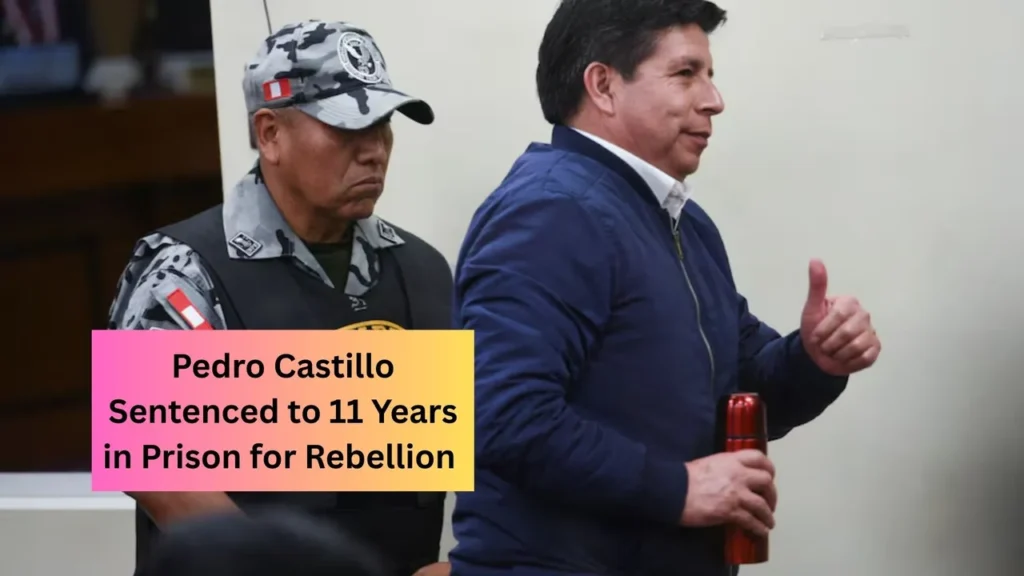
When a country’s president is removed from office, it always sparks debate. But when a president is jailed for attempting a political rebellion, that becomes international news. This is exactly what happened with former Peruvian President Pedro Castillo. In a dramatic legal decision, Castillo has been sentenced to 11 years in prison for his failed attempt to dissolve Congress in 2022.
So, what exactly happened? Why does this case still stir heated discussions across Peru and beyond? And what does this mean for the future of Peruvian politics? Let’s dive in.
Understanding the Pedro Castillo Verdict
A Quick Background on Pedro Castillo
Pedro Castillo rose from being a rural teacher and union leader to the president of Peru in 2021. His journey was unconventional, inspiring millions who felt ignored by the political elite. But his presidency quickly became turbulent, marked by constant clashes with Congress, corruption allegations, and unstable cabinets.
The Day Everything Changed: December 7, 2022
Castillo shocked the nation when he announced the dissolution of Congress, declared a state of emergency, and said he would rule by decree. Within hours, the military, police, and even his own ministers abandoned him. Congress impeached him, and he was arrested while allegedly trying to reach the Mexican embassy.
This incident became known globally as the 2022 rebellion attempt.
Why Was Pedro Castillo Sentenced to 11 Years?
Charges Against Castillo
The Peruvian judiciary found Castillo guilty of:
- Rebellion
- Abuse of authority
- Breaching the constitutional order
These are not minor accusations. In fact, rebellion charges are among the most serious in Peru’s legal system.
How the Court Reached Its Decision
The judges reviewed Castillo’s televised announcement, the executive orders he attempted to issue, and testimonies from former ministers and government officials. They concluded that:
- Castillo tried to illegally seize power.
- He sought to override the constitution.
- His actions represented an attempted coup.
Castillo’s Defense Argument
Castillo insisted he was a victim of political persecution and argued that he did not intend to overthrow democracy. He claimed he was acting to “restore order” in a country that had repeatedly blocked his governance.
However, the court rejected these claims.
The Political Shockwaves in Peru
How Peruvians Reacted
Peru was sharply divided.
Supporters’ Response
Many of Castillo’s supporters, especially from rural and Indigenous communities, believe he was unfairly targeted by a Congress that never accepted him. They see him as a symbol of social struggle and political resistance.
Critics’ Reaction
His critics argue that his actions were dangerous, reckless, and a direct threat to democracy. They believe the sentence was necessary to preserve constitutional order.
What This Means for Peru Today
A Deeply Divided Political Climate
Peru has seen multiple presidents removed or jailed in the past two decades. Castillo’s case reinforces the pattern of political instability, making many wonder: Is Peru stuck in a cycle of political chaos?
Impact on Future Leaders
Future presidents will likely be more cautious. The ruling sends a strong message that:
- Attempting to bypass Congress
- Violating constitutional rules
- Or pursuing authoritarian shortcuts
can lead to severe legal consequences.
Was It Really a Rebellion Attempt?
The Debate Continues
Some analysts argue that Castillo’s attempt was poorly planned, lacked military support, and failed so quickly that calling it a “rebellion” may be an exaggeration. Others say intent matters more than execution.
The Legal vs Political Interpretation
- Legally, the fact that he announced a dissolution of Congress was enough.
- Politically, the failed attempt was considered an avoidable crisis caused by a desperate leader.
Castillo After the Sentencing
His Life Behind Bars
Castillo is expected to serve his sentence in a high-security prison. Reports say he continues to speak about injustice and remains defiant.
Can He Appeal?
Yes. His lawyers plan to appeal the verdict to Peru’s Supreme Court and potentially to international tribunals, arguing the trial was biased.
The International Reaction
Latin America’s Mixed Response
Several left-leaning governments expressed concern about the political climate in Peru. Others stayed neutral, respecting the court’s decision.
Global Concerns About Instability
International observers warn that Peru’s constant political turmoil could affect:
- Foreign investment
- Tourism
- And social development
Basically, instability scares investors—and Peru has had too much of it lately.
The Story Behind the Story: Why So Many Presidents Fall in Peru
A Pattern of Presidential Downfall
Peru has one of the highest political turnover rates in the world. Several presidents before Castillo were:
- Impeached
- Investigated
- Arrested
- Or forced to resign
A System Designed for Conflict
Peru’s constitution allows Congress to impeach the president with relative ease. This creates a constant power struggle—like two drivers fighting over a steering wheel.
What Happens Next?
For Castillo
His legal battles aren’t over. He faces multiple corruption investigations, which could extend his prison time.
For Peru
The country continues to search for stability. With new elections on the horizon, citizens hope for leaders who can break the cycle of conflict.
Conclusion
Pedro Castillo’s 11-year sentence is more than a legal decision—it’s a reflection of Peru’s ongoing political turbulence. His rise, fall, and imprisonment capture a nation struggling between old systems and new hopes. Whether you view him as a misguided leader or a victim of political persecution, one thing is clear: Castillo’s story is now a defining chapter of Peruvian history.
As Peru moves forward, only time will tell whether this verdict brings stability or deepens the divide.
FAQs
1. Why was Pedro Castillo sentenced to 11 years?
He was convicted of rebellion, abuse of authority, and violating the constitutional order after attempting to dissolve Congress in 2022.
2. Is Pedro Castillo still appealing the decision?
Yes. His legal team plans to challenge the ruling in higher courts.
3. Did his rebellion attempt have military support?
No. The military, police, and most of his ministers rejected his actions immediately.
4. How are Peruvians reacting to the sentence?
The country is divided—some support the ruling, while others believe Castillo was politically targeted.
5. What does this mean for Peru’s future politics?
It reinforces accountability but also highlights ongoing instability within the country’s political system.