
If you’ve been watching the news lately, you’ve probably heard about the surge in immigration enforcement actions in various U.S. cities. Now, the spotlight has turned to New Orleans — with raids underway, families on edge, and communities bracing for impact. In this article, let’s unpack what’s going on, why it matters, and what it means for people on the ground.
What’s Going On in New Orleans Right Now
Raids Have Officially Begun
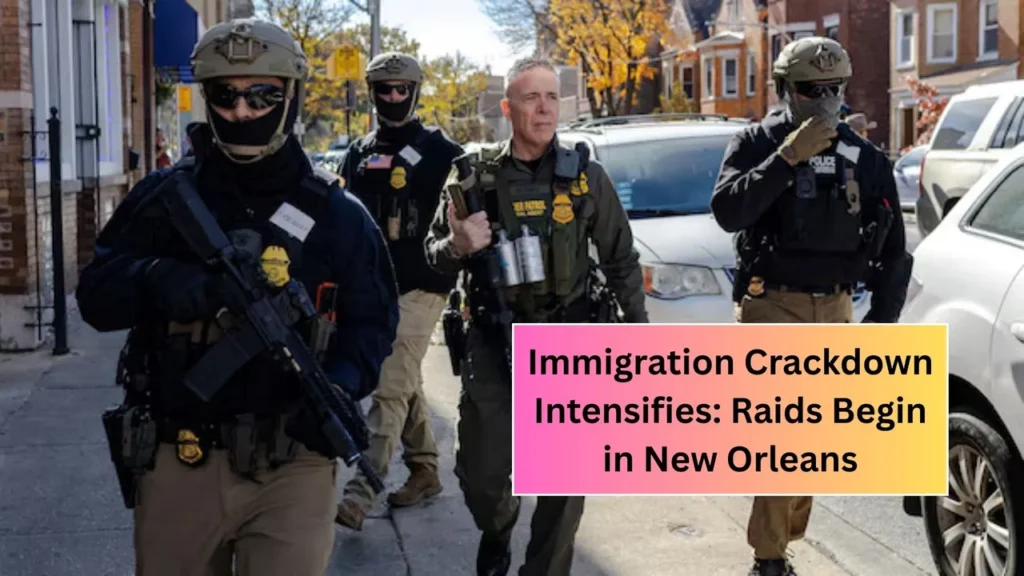
Over the past few weeks, law enforcement agencies have initiated a series of coordinated raids in neighborhoods across New Orleans. This is not just a handful of arrests — it’s a full-scale enforcement wave, targeting individuals suspected of being undocumented or otherwise in violation of immigration laws. Some raids reportedly happened early in the morning, catching people off guard as they were getting ready for work, school, or just going about their day.
These operations are being carried out by immigration enforcement officers, working under mandates issued by federal authorities. The goal: to detain and potentially deport individuals who are undocumented or flagged under certain immigration criteria.
It’s a tense, chaotic time for many — especially for immigrant communities who are thinking: “Will we be next?”
The Atmosphere: Fear, Confusion, Anxiety
When raids sweep through neighborhoods, the atmosphere changes almost instantly. Doors slam shut, children are kept inside, community centers see fewer faces, and trust — especially in public institutions — erodes.
People worried about their immigration status are laying low. Community organizers are getting frantic calls. Parents are avoiding letting their kids go out. The sense of normalcy — weekend soccer games, group prayers, neighborhood barbecues — starts to fade.
That’s the immediate human cost: fear. And when fear spreads, it affects not just individuals, but entire communities.
Why It’s Escalating: The Broader Context
Tougher Immigration Policies at the National Level
To understand why raids intensified now, we need to zoom out. At the national level, immigration policy has been tightening. Rules around visa expirations, asylum eligibility, and deportation priorities have become more stringent.
Government rhetoric has emphasized “enforcing the laws on the books.” As a result, local enforcement agencies are under pressure to show results, leading to a surge in raids — including places like New Orleans that may not have seen large-scale enforcement in the past.
Local Factors — Why New Orleans?
Why New Orleans? It’s not just happenstance. There are several local dynamics at play:
- Demographics: The city has a sizeable immigrant community — from Latin American, Caribbean, and other backgrounds.
- Labor demand: Sectors like construction, hospitality, and food services rely heavily on immigrant labor. As enforcement tightens, employers may under-report or collaborate more with authorities.
- Law enforcement cooperation: Local agencies may be working more closely with federal immigration authorities, perhaps under agreements or new mandates.
So New Orleans — with its unique labor scene and diverse population — becomes a target when immigration enforcement ramps up.
Who Is Being Targeted
Undocumented Immigrants — The Main Focus
Most of those being targeted in the raids are individuals believed to be residing in the U.S. without legal immigration status. That includes people who crossed the border without authorization, individuals whose visas have expired, and those who may have failed to process or renew documentation on time.
For many, their lives are built in New Orleans — jobs, families, community ties — but that doesn’t shield them from being detained if they fall under enforcement priorities.
Mixed-Status Families Caught in the Crossfire
It’s not just single immigrants. Mixed-status families — where some members are citizens or legal residents, and others are undocumented — now face upheaval.
Imagine a home where one spouse is a citizen, children are born in the U.S. and eligible for benefits, and yet one parent is undocumented. A raid doesn’t just threaten one person — it threatens stability, the family’s safety, and children’s well-being.
Collateral Damage — Workers, Tenants, Communities
Beyond individuals, entire communities are affected. Some common consequences:
- Labor shortages: Employers losing workers overnight.
- Housing instability: If undocumented tenants are detained or scared away, landlords may face vacancies.
- Economic ripple: Local businesses that rely on immigrant customers or employees may suffer.
So the impact goes beyond personal stories — it shakes local economies and the social fabric.
Community Responses — Coping, Organizing, Resisting
Grassroots Organizations Step In
Suddenly, community centers, churches, and nonprofits become lifelines. Groups are offering legal aid, emergency housing, or simply advice on rights and safe behavior.
They host “know-your-rights” workshops, distribute hotlines, and mobilize volunteers to check in on vulnerable families. In times like this, local solidarity can make a huge difference.
Parents and Children — Treading Lightly
Some parents are now reluctant to send their children to school. Others are avoiding medical appointments, grocery shopping, or public transportation — simply out of fear.
That’s when life starts to shrink: you leave your home less, avoid public spaces, don’t visit friends or family. Over time, that isolation can take a heavy psychological toll.
Local Businesses — Between a Rock and a Hard Place
Business owners, especially in sectors reliant on immigrant labor, face dilemmas. Some may feel pressured to comply with enforcement requests, while others try to protect their workers.
It becomes a tug-of-war between economic survival, community loyalty, and legal pressure.
Legal and Ethical Questions — Is This the Right Approach?
Due Process Concerns
Critics argue that widespread raids risk violating due process. People might be detained based on suspicion, accusations, or flimsy documentation — sometimes without clear opportunities to contest their status.
Should a person’s life and livelihood collapse based on one mistaken identity? That’s a serious question communities are asking.
Impact on Civil Rights and Social Trust
When law enforcement sweeps through neighborhoods, gathering information and stopping people, many start to view all public institutions with suspicion — not just immigration enforcement.
This undermines trust in police, public schools, hospitals. It can lead to under-reporting of crimes, reduced cooperation with authorities, and a general erosion of communal safety.
Economic and Social Ripple Effects
Beyond individuals, there are broader social costs: families broken apart, kids struggling in school, unemployed or under-employed adults, local businesses weakening. Over time, the neighborhood dynamic shifts — and not in a good way.
What’s Next — Possible Outcomes & Scenarios
More Raids — The Pattern Could Continue
Given national enforcement trends, there’s a real possibility that the raids will expand — covering other neighborhoods, similar cities, maybe neighboring states.
If local agencies continue to cooperate, and pressure remains high, we might see enforcement scale up even further.
Legal Pushback — Community Pressure Grows
Yet, there’s another possible outcome: legal challenges, public outcry, and political pushback. Civil-rights organizations may begin suing for unconstitutional practices. Local elected officials may be pressured to withdraw cooperation with federal enforcement.
This could slow or stall the raids — but only if communities mobilize and demand protection.
Increased Undocumented Migration to Safer Areas
As New Orleans becomes a hotspot for raids, undocumented individuals may start relocating — to different states, rural areas, or outside the U.S. This internal migration could shift demographics, strain resources elsewhere, and create new enclaves of vulnerable communities seeking safety.
If You’re Affected — What You Should Know
Know Your Rights
If you’re undocumented or part of a mixed-status family, it’s crucial to know your rights under U.S. law. You have rights when it comes to searches, detentions, and deportations. You have the right to remain silent and to request legal counsel.
Do not open your door unless officers have a warrant. If they claim to have one — ask to see it.
Document Everything — Legally and Practically
Keep copies of identity documents, visas, work permits, and proof of community or school enrollment if possible. Also document any interactions with law enforcement: time, place, names (if provided), and what was said.
Having a paper trail — or an audio recording if legal in your area — might help down the line.
Reach Out to Support Networks
Connect with community organizations, legal aid groups, local nonprofits, advocacy groups, or trusted neighbors. Isolation makes you vulnerable; community solidarity adds strength.
Many organizations offer pro-bono legal advice, emergency housing, and even temporary financial support.
Why This Matters to Everyone — Not Just Immigrants
The Erosion of Basic Rights and Freedoms
When raids become common and fear spreads, basic civil liberties start to erode — not only for undocumented immigrants, but for everyone. Once you accept raids, widespread surveillance, and detentions without transparency, you set a precedent.
Today it’s immigrants. Tomorrow? It could be other marginalized groups.
Economic Fallout — On the City, Not Just Individuals
Local economies depend on immigrant labor: from construction to restaurants, from cleaning services to agriculture. If that workforce disappears overnight, businesses suffer — and prices may rise for everyone.
Vacant rentals, shuttered shops, fewer customers — the ripple effect can hit entire neighborhoods, weakening the economic resilience of the city.
Social Fabric Under Strain — Communities Fragmenting
When families flee, when people stop attending community events, schools, religious gatherings, or social outings — community cohesion weakens. Social trust is harder to rebuild.
Isolated individuals are more vulnerable, and neighborhoods shift from being vibrant and connected to anxious and fragmented.
How Journalists, Activists, and the Public Are Responding
Media Coverage Brings Stories to Light
Reporters are interviewing families, highlighting stories of separation, and putting a human face to statistics. These stories — often heartbreaking — help reveal the human cost of enforcement policies.
That visibility can spark empathy, outrage, and pressure on policymakers to reconsider tactics.
Activists Demand Oversight and Reform
Community organizers and civil-liberties advocates are calling for transparency: want to know who authorized raids, what criteria are used, and how long people are detained.
They demand due process, fair hearings, and humane treatment. Some are even exploring legal action to challenge sweeping enforcement against immigrant populations.
Everyday People Getting Involved — Neighbors Helping Neighbors
Neighbors who may not be directly impacted are stepping in — offering free rides to community meetings, sharing information about legal aid, volunteering to transport kids to school safely, or donating food and resources to affected families.
It’s community spirit in action. In tense times like these, that solidarity can be a lifeline.
Reflections — Should This Be the Way We Handle Immigration?
Law Enforcement vs. Human Lives — Is There a Balance?
Sure — governments argue that laws need to be enforced. But is heavy-handed enforcement the only way? What about solutions that consider human dignity, economic realities, and integration?
When you treat people like numbers or “cases,” you lose sight of lives, families, and futures.
Immigration Is Not a Crime — But Policies Should Be Humane
Many immigrants come seeking better opportunities, fleeing violence or hardship abroad, or simply trying to build a life. Immigration itself is not a crime — yet enforcement actions often treat it like one.
Could the same goal — safe, orderly immigration — be achieved with more compassion, clearer pathways, and community cooperation rather than fear?
The Risk of Alienation — Not Just for Immigrants, But for Society
When entire communities live in fear, they withdraw. They stop participating in civic life. They become invisible.
That’s a heavy cost — not just for those targeted, but for society at large. Diversity, community bonds, economic vitality: all take a hit.
What Could Change — Possible Paths Forward
Policy Reform — Humane Immigration Overhaul
Advocates are calling for comprehensive immigration reform: clearer visa processes, fair pathways for undocumented immigrants to legalize status, and protections for families.
If done right, reforms could reduce the need for aggressive raids, and build long-term stability — for immigrants, workers, and communities.
Community-Led Solutions — Integration, Support, and Stability
Grassroots efforts could focus on integration: language programs, job training, legal aid, mental-health support. Communities can build trust, and help immigrants become secure, contributing members of society — not hidden, fearful shadows.
Transparency and Accountability in Enforcement
If law enforcement insists on carrying out raids, then there should be oversight: transparent criteria, community review boards, regular reporting, and adherence to fair procedures.
That way, enforcement doesn’t become a blunt instrument, but a regulated tool — used as a last resort, not a widespread tactic that causes collateral damage.
Conclusion
The raids that have begun in New Orleans mark a troubling escalation in the ongoing immigration crackdown. Lives are being disrupted. Families are being torn apart. Communities are plunged into fear. And the ripple effects — economic, social, psychological — are just beginning to show.
But amid the fear, there’s also strength: in community solidarity, in grassroots activism, in families holding tight, and in neighbors reaching out to help. This moment — painful as it is — might also be the spark that ignites a broader push for compassionate, fair immigration policies.
Because at the end of the day, immigration isn’t just about law enforcement. It’s about people. People with hopes, fears, dreams — people who deserve dignity, safety, and a chance to build a life.
If we lose sight of that, we lose more than just documents. We lose humanity.
FAQs
1. What exactly triggered the recent raids in New Orleans?
The raids stem from increased federal enforcement priorities and expanded cooperation between immigration authorities and local enforcement agencies. Tighter national policies on visa expirations, asylum eligibility, and deportation criteria have created pressure to act — and New Orleans, with its large immigrant population and labor-reliant industries, became a target.
2. How can families protect themselves if they fear being targeted by raids?
Families concerned about raids should know their rights, avoid opening doors without a valid warrant, and request legal counsel if confronted. It helps to keep copies of identity documents, proof of residency, and community ties. Seeking support from local nonprofits, community organizations, and legal aid groups can provide resources and guidance during these uncertain times.
3. Are the raids only affecting undocumented immigrants?
Although undocumented immigrants are the primary targets, mixed-status families and individuals with expired or pending visas are also at risk. Sometimes, people with legal status but unclear documentation or prior violations may also face scrutiny. Collateral effects can impact entire communities — not just individuals who are undocumented.
4. What are the broader consequences for New Orleans beyond deportations?
Beyond individuals being detained or deported, the raids can trigger labor shortages, economic instability, housing vacuums, and even social isolation. Local businesses may struggle with workforce gaps, neighborhoods might lose families, and community cohesion can erode. The social and economic ripple effects are far-reaching.
5. Can community activism and legal challenges stop or slow down future raids?
Yes — community activism, legal advocacy, and public pressure can influence policy enforcement. Organizing “know-your-rights” workshops, supporting affected families, demanding transparency, and mounting legal challenges can lead to oversight, accountability, and even policy reform. Community solidarity often becomes a powerful deterrent against indiscriminate enforcement.