
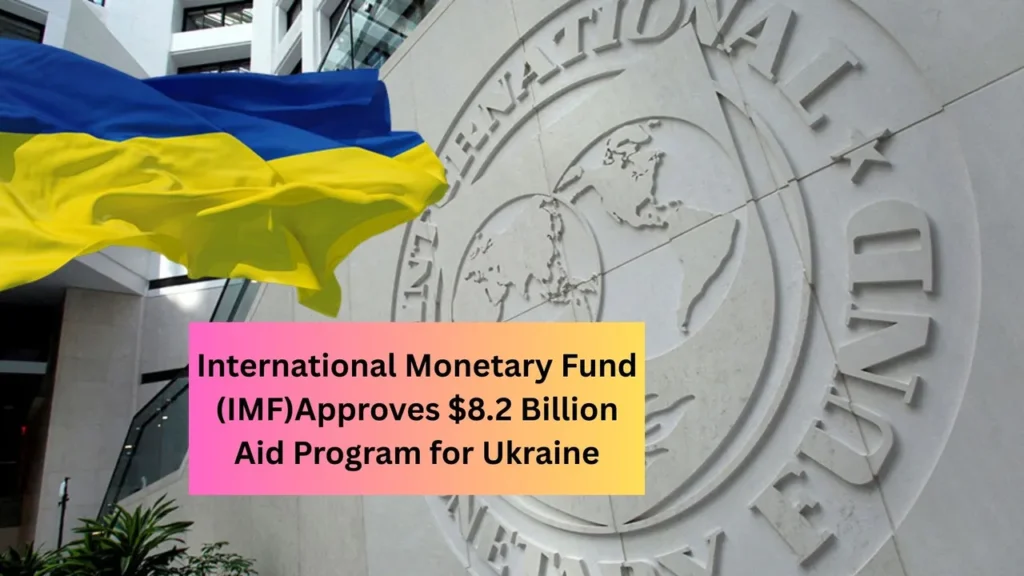
The news has just broken: the International Monetary Fund (IMF) has reached a staff-level agreement with Ukraine on a new four-year, US$8.2 billion support program. If you’re wondering — yes, this is a big deal. In a time when war and economic instability continue to weigh heavily on Ukraine, this kind of financial backing can make all the difference.
In this article, I’ll walk you through what the aid program involves, why it’s critical for Ukraine now, what the conditions are, the potential risks, and what might happen next. Think of this as your friendly guide to understanding a major global financial move — no jargon, just plain talk.
Background — Why Ukraine Needs Another Round of Support
The Ongoing War and Its Economic Toll
Since the full-scale war began, Ukraine has faced immense economic pressure. Infrastructure has been damaged, energy systems disrupted, and public finances under severe strain. The war hasn’t just been a human tragedy — it’s stretched Ukraine’s budget to the breaking point.
Previous IMF Support History
You may remember that in March 2023, Ukraine began a four-year program under IMF’s Extended Fund Facility (EFF), with funding around US$15.5 billion (SDR 11.6 billion).As of mid-2025, that program had enabled Ukraine to draw more than US$10.6 billion for budget support and other needs.
Still, despite that support, the combination of ongoing war, reconstruction needs, and macroeconomic strain means that more backing was essential to avoid a fiscal and humanitarian collapse.
What the $8.2 Billion Deal Entails
Extended Fund Facility for the Next Four Years
The new agreement is structured under the same EFF framework. The IMF staff and Ukrainian authorities negotiated a 48-month arrangement with potential access to SDR 5.94 billion — roughly US$8.1–8.2 billion.
Importantly, this isn’t a one-time handout. It’s a multi-year program meant to anchor macroeconomic stability over time, helping Ukraine manage its finances, debt, and external obligations while seeking long-term reconstruction and recovery.
Objectives — Economy, Debt, Reform, Stability
Under the agreement, Ukraine commits to a set of fiscal, monetary, and structural reforms. Key goals include:
- Restoring debt sustainability and external viability.
- Maintaining macroeconomic and financial stability.
- Broadening the tax base, combating tax evasion, and improving revenue mobilization (including tax and customs reforms).
- Reforming state-owned enterprises and improving governance (better transparency, anti-corruption measures, improved institutional frameworks).
- Adjusting monetary policy: central bank to aim for disinflation, maintain FX reserves, and allow greater exchange-rate flexibility to weather shocks.
H3: Catalyzing Further International Support
One often-overlooked role of IMF backing: it acts as a “seal of credibility.” With IMF support, Ukraine may find it easier to attract other international aid and financing — from governments, multilateral lenders, or private investors — crucial for reconstruction.
The financing gap for Ukraine (2026–2029) is estimated to be around US$136.5 billion, so this $8.2 billion doesn’t solve everything — but it can anchor broader donor support.
H2: Why the Deal Matters — Potential Impact on Ukraine
Stabilizing Government Spending and Public Services
With war-time burdens, governments need cash to keep public services running: defense, social support, energy, reconstruction, humanitarian relief. This aid gives Ukraine a critical financial buffer — a bit like an emergency loan when you’ve hit rough waters but still need to steer the ship.
Avoiding a Debt Spiral
By linking financing to reforms and debt-sustainability measures, the program helps prevent Ukraine from slipping into a crippling debt spiral. That’s vital for long-term viability and for rebuilding trust among international lenders.
Signalling Commitment to Reform and Transparency
The conditionality — tax reform, anti-corruption, governance — shows that Ukraine isn’t just asking for money. It’s committing to structural change. That may help draw in investors, rebuild institutions, and eventually support economic growth once peace returns.
A Foundation for Reconstruction and Recovery
When the war ends or subsides, reconstruction will be massive. Roads, housing, energy infrastructure, utilities — all will need rebuilding. Having a stable macroeconomic base, backed by IMF and further aid, is like laying the concrete foundation before building a new house. Without it, recovery plans might collapse under their own weight.
What’s at Stake — Risks and Conditions
War Uncertainty and Economic Headwinds
The war isn’t over. Continued conflict — attacks on energy infrastructure, population displacement, instability — can derail even the best-laid plans. The IMF itself warns that risks remain “exceptionally high.”
Economic growth has already slowed: in 2024 growth remained “resilient,” but the outlook for 2025 and beyond is cautious.
Need for Consistent Reform Implementation
The financial support comes with strings attached. Tax reform, customs reform, anti-corruption measures, restructuring state enterprises — none of this is easy, especially in a war-time environment with institutional stress. If reforms stall, the deal might lose effectiveness, or future disbursements could be delayed.
Dependence on External Donor Financing
Even with IMF support, Ukraine’s financing needs are huge. The program expects additional large-scale external support — especially grants or concessional financing — to avoid debt overload or future liquidity problems.
If donor funding lags or geopolitical tensions complicate aid, Ukraine may again find itself in a precarious situation.
What Comes Next — Timeline & What to Watch
Executive Board Approval and Donor Guarantees
For the program to officially go live, the IMF’s Executive Board must give final approval. That’s standard procedure. Then Ukraine needs assurances that donors will help fill the larger funding gaps — otherwise the program’s effectiveness will be limited.
Implementing Fiscal, Monetary and Institutional Reforms
Implementation will matter more than the promise of money. Ukraine will need to follow through on reforms: tax, customs, public finance management, state-owned enterprises, governance, inflation control, and more.
Monitoring War Developments and External Support
Given the uncertainty of the war, economic conditions could shift rapidly. Inflation, energy disruptions, capital flight, or renewed conflict could derail progress — the IMF program will likely need to be flexible and calibrated for each review. As the IMF noted, the program will be “recalibrated as needed at each review depending on progress towards a resolution of the war.”
Long-Term Reconstruction, Investment & Growth
If things go well — reforms are implemented, additional donor financing arrives, war subsides eventually — the aid program could become the foundation for long-term recovery. Once reconstruction begins at scale, Ukraine could see new investments, rebuild infrastructure, and lay the groundwork for future growth.
The Bigger Picture — Why the World Is Watching
Geopolitical Implications
This isn’t just about economics. The decision by IMF signals international confidence in Ukraine’s ability to manage its finances and push reforms, even amid war. That’s a geopolitical statement: countries and investors may feel more comfortable committing resources to Ukraine if a global institution like IMF stands behind it.
Rebuilding Trust in Global Financial Institutions
The war in Ukraine has rattled confidence. By offering support under clear conditions — not a blank check — the IMF reinforces the idea that aid comes with responsibility. It’s an attempt to blend compassion (recognizing Ukraine’s plight) with fiscal discipline (ensuring long-term viability).
Precedent for War-Torn Economies
This deal could become a template for how international financial institutions support countries suffering through prolonged conflict. It’s a balance: support for current needs + conditional structure for long-term stability.
So What Does This Mean — In Plain Speak
- Ukraine now has a financial buffer for the next four years — crucial for government operations, social safety nets, defense, and initial reconstruction.
- The deal isn’t a freebie — Ukraine has to walk the reform path. That’s good, because long-term stability depends on discipline, not just cash injections.
- Success isn’t guaranteed. War unpredictability, heavy reforms, and reliance on donor financing all make the road bumpy.
- But if things go right — if reforms stick, donors step up, and peace returns — this could be the foundation from which Ukraine rebuilds stronger.
Think of it like a wounded ship being patched up mid-sea — not fully repaired, but stable enough to reach dry land and begin rebuilding.
What This Means For People — Everyday Ukrainians, Global Citizens, Observers
For Ukrainians
- A better chance that public services (healthcare, pensions, social welfare) continue despite war.
- Hope that reconstruction will begin, jobs may return, and stability may improve over time.
- Confidence that reforms will address corruption, broken institutions, and economic inefficiencies — which affect everyday life.
For International Donors and Investors
- IMF backing gives assurance that Ukraine has a credible reform plan.
- This could make investors more likely to participate in rebuilding infrastructure, energy, housing — sectors likely to boom post-war.
- For donor governments and international organizations, it offers a roadmap for structured support rather than ad-hoc funding.
For the World
- It reinforces that a global institution can support a country through war if there’s commitment to reform and governance.
- It shows a model of how reconstruction might be financed — a mix of loans, grants, reforms, and aid.
- It underscores economic resilience even under extreme stress, which could inform support for other countries in conflict or crisis.
Things to Watch — What Could Stall or Derail the Program
- Continued war escalation — further damage to infrastructure, energy systems, population displacement.
- Delay or failure in implementing key reforms (tax, customs, governance, anti-corruption, public enterprise overhaul).
- Shortfall or delay in donor financing — grants, loans, reconstruction funds. Without those, debt burden could rise dangerously.
- Macroeconomic instability — inflation spike, exchange-rate volatility, capital flight, disruption in supply chains.
- External shocks beyond the war — global recession, energy crises, geopolitical tensions elsewhere.
Conclusion
The new $8.2 billion program from the IMF offers a fresh lifeline to Ukraine at a time when the country desperately needs financial stability, reform, and hope for reconstruction. It’s not magic — it won’t instantly rebuild destroyed cities or end suffering — but it’s a foundation. With commitment, discipline, and a bit of luck, this deal could help Ukraine navigate one of the toughest periods in its history and emerge on the other side with better institutions, stronger public finances, and a path toward recovery.
What happens next will depend not just on money, but on resolve: reforms, transparency, external support, and peace. The stakes are high — but the potential payoff, for Ukraine and beyond, may be even higher.
FAQs
Q1: Is the $8.2 billion from IMF a loan or a grant?
It’s structured under the Extended Fund Facility (EFF), which is essentially financial assistance — a type of loan support. But the terms are designed to accompany macroeconomic reforms and stabilization, giving Ukraine more manageable repayment conditions.
Q2: When will Ukraine actually get the funds?
First, the agreement must be approved by the IMF Executive Board. After that—and contingent upon prior actions being completed and donor financing assurances—the IMF disbursement will begin under the terms of the program.
Q3: Does this mean Ukraine’s long-term debt burden will increase?
Potentially yes — since it’s financing under a loan-based facility. But the aim is to pair the funding with reforms to restore debt sustainability, so the net effect may stabilize debt rather than exacerbate it (assuming reforms and additional external support follow through).
Q4: What kind of reforms does Ukraine need to implement?
Key reform areas include broadening tax base, improving tax and customs services, fighting tax evasion, improving governance and transparency in state-owned enterprises, better monetary policy and inflation control, and structural reforms to public investment and debt strategy.
Q5: Could this program fail or be canceled?
Yes — if reforms are delayed, war intensifies, donor financing dries up, or macroeconomic conditions worsen drastically. Success depends heavily on consistent reforms, stable external support, and the broader geopolitical context.