
Have you come across the FreeRange Antenna that promises to deliver free HD channels like ABC, CBS, NBC, and more—without any subscription? Sounds too good to be true, right? With its bold claims of 500-mile signal range and automatic channel scanning, the FreeRange Antenna has been getting a lot of attention lately. But the real question is—does it actually work, or is it just another scam trying to ride the “cut the cord” wave?
In this in-depth review, we’ll dig into what the FreeRange Antenna is, how it works, its features, pros and cons, customer experiences, and most importantly—whether it’s worth your money.
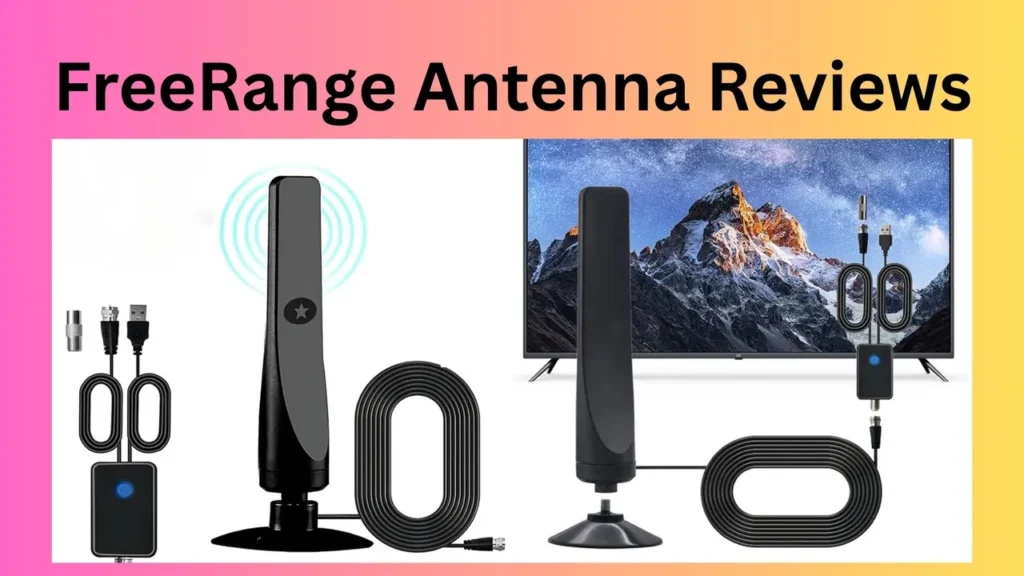
What Is the FreeRange Antenna?
The FreeRange Antenna is advertised as an indoor HD TV antenna designed to pull in free over-the-air channels. It claims to capture signals from major networks like ABC, CBS, NBC, Fox, and PBS without needing a cable subscription.
According to the product description, this antenna can:
- Scan and remember available channels automatically.
- Receive broadcast signals up to 500 miles away.
- Deliver high-definition picture quality (720p to 1080p/ATSC).
- Work almost anywhere in your home.
That’s quite a list of promises—but how much of it holds true?
How Does the FreeRange Antenna Work?
Like any TV antenna, the FreeRange Antenna works by capturing over-the-air (OTA) signals transmitted by local broadcast towers. These signals are freely available and can be accessed by anyone with the right equipment.
The antenna connects to your television through a coaxial cable, and once plugged in, you can run a channel scan from your TV’s settings. It then picks up available channels based on your location and signal strength.
However, the claim of receiving signals from 500 miles away raises a red flag. Even professional-grade outdoor antennas rarely reach more than 150 miles.
The Big Claim: 500-Mile Reception – Fact or Fiction?
Let’s be real—500 miles is an enormous distance. The curvature of the Earth and the nature of TV signal transmission make such range practically impossible.
Most reliable antennas, even outdoor ones, operate efficiently within 50–100 miles. For an indoor antenna to claim five times that range is quite unrealistic.
So, if you’re expecting to watch out-of-state channels or stations hundreds of miles away, you might be disappointed.
Key Features of the FreeRange Antenna
Let’s take a look at what the product claims to offer:
Advanced Signal Transmission Technology
It supposedly uses enhanced signal protection to minimize interference and boost reception quality.
Automatic Channel Scan
Once plugged in, the antenna automatically scans available local channels and saves them for easy access.
Full HD Support
It supports resolutions like 720p, 1080p, and ATSC, promising crystal-clear picture quality.
Compact and Easy Installation
It’s designed for simple plug-and-play setup—just attach it to a wall, window, or flat surface.
Multi-Directional Reception
The antenna claims to receive signals from all directions without needing manual adjustment.
Sounds great on paper—but does it really live up to those promises?
Setting Up the FreeRange Antenna
Installing the FreeRange Antenna seems easy enough. Here’s how it’s typically done:
- Connect the antenna to your TV using the provided coaxial cable.
- Place the antenna near a window or high surface for better reception.
- Go to your TV’s menu and start a channel scan.
- Save the scanned channels and start watching.
While setup is simple, results may vary drastically depending on your location and the proximity of broadcast towers.
Pros of the FreeRange Antenna
- Easy to install: No complex wiring or tools needed.
- No subscription fees: Once you buy it, you can access free channels.
- Compact and portable: Lightweight and easy to move around.
- Decent HD quality (in some areas): Works fine if you’re near a strong signal zone.
Cons of the FreeRange Antenna
- Exaggerated range claims: 500 miles is misleading and practically impossible.
- Inconsistent signal strength: Quality depends heavily on your location.
- Limited number of channels: Some users report only getting a few local stations.
- Mixed customer feedback: Several buyers call it a gimmick.
- Cheap build quality: Many reviewers mention fragile parts and weak adhesive mounts.
Real Customer Experiences
When looking at verified reviews, opinions about the FreeRange Antenna are split. Some users say it works well in urban areas close to transmission towers, while others—especially in rural regions—report getting little to no signal.
Common complaints include:
- Not receiving promised HD channels.
- Poor reception in remote locations.
- False marketing claims about range and performance.
On the other hand, a few users near city centers found it useful for basic local channels like ABC or NBC.
Comparing FreeRange Antenna with Other Brands
To put things into perspective, let’s compare it with a few trusted brands.
| Feature | FreeRange Antenna | Mohu Leaf | ClearStream Eclipse |
|---|---|---|---|
| Range | 500 miles (claimed) | 50 miles | 35–70 miles |
| Price | Mid-range | Moderate | Moderate |
| Customer Satisfaction | Mixed | High | High |
| Build Quality | Average | Excellent | Very Good |
Clearly, while FreeRange markets itself aggressively, reputable brands with realistic expectations tend to deliver more reliable performance.
Is the FreeRange Antenna Legit or a Scam?
So, let’s address the elephant in the room—is the FreeRange Antenna a scam?
While it’s not a total scam (it does function as an antenna), the marketing is highly misleading. Claims like “500-mile range” and “superior signal protection” are not backed by physics or real-world results.
Essentially, it works like any other low-cost indoor antenna, but it’s wrapped in flashy advertising. If you’re expecting miraculous long-range reception, you’ll likely be disappointed.
Who Might Benefit from It?
If you live in an urban or suburban area close to broadcasting towers, the FreeRange Antenna might serve you decently for local channels.
However, if you’re in a rural location or want to access channels hundreds of miles away, you’ll need a stronger, outdoor-grade antenna instead.
Tips for Getting Better Signal Reception
- Place it near a window or high wall. Avoid thick walls or metal surfaces.
- Rescan channels regularly. Sometimes new channels become available.
- Use a signal amplifier. An external booster can improve weak reception.
- Check online tower maps. Websites like “TV Fool” or “AntennaWeb” help locate nearby broadcast towers.
Final Verdict
The FreeRange Antenna might work for some, but it’s not the miracle device its advertisements suggest. While it can pick up free local HD channels in strong signal areas, its 500-mile range claim is clearly exaggerated.
If you just want to catch a few local stations without paying for cable, it could be a budget-friendly option. But if you’re expecting premium-level performance or long-distance reception, you might want to invest in a more reputable brand.
Conclusion
In short, the FreeRange Antenna isn’t entirely fake—but it’s not the powerhouse it claims to be either. It performs like a basic indoor antenna, offering decent results in certain areas but failing to live up to its bold marketing.
If cutting the cord is your goal, research your local broadcasting conditions first and go for a proven model with realistic specs. After all, when something sounds too good to be true—it usually is.
FAQs
1. What channels can I get with the FreeRange Antenna?
You can typically access local broadcast channels such as ABC, CBS, NBC, Fox, PBS, and other regional stations depending on your location and signal strength.
2. Does the FreeRange Antenna really have a 500-mile range?
No, that’s mostly marketing hype. Real-world results show most indoor antennas perform best within 30–80 miles.
3. Can I use the FreeRange Antenna on multiple TVs?
Yes, but you’ll need a signal splitter and additional coaxial cables to connect it to more than one TV.
4. Is there any monthly fee for using FreeRange Antenna?
No. Once purchased, there are no subscription fees. You’ll only receive free, over-the-air channels.
5. Is the FreeRange Antenna worth buying?
If you’re near strong broadcast signals and want a low-cost way to watch local channels, it might work for you. But if you expect long-distance HD performance, it’s better to look for more reliable alternatives.