
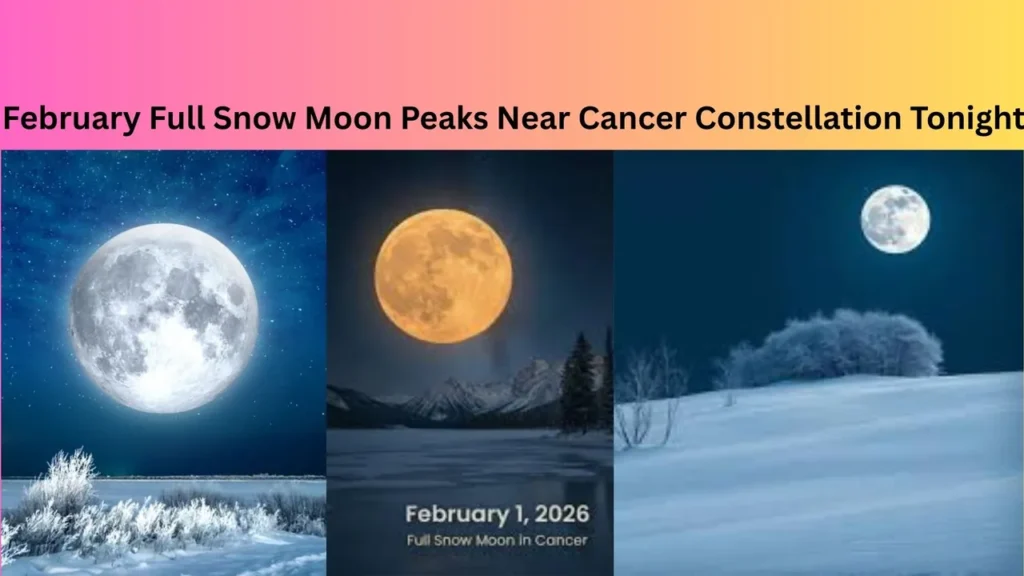
Look up tonight—because the sky has a little magic planned. The February Full Snow Moon is reaching its peak illumination near the Cancer constellation, and it’s one of those celestial moments that feels both calm and powerful at the same time.
Whether you’re a night-sky lover, a casual stargazer, or someone who just enjoys meaningful cosmic events, this full moon is worth your attention. So, what makes the Snow Moon special? Why is Cancer involved? And when exactly should you look up?
Let’s break it all down—simple, clear, and human-style.
What Is the February Full Snow Moon?
The Snow Moon is the traditional name given to the full moon in February. And honestly, the name makes perfect sense.
Why Is It Called the Snow Moon?
February is typically the snowiest month in many parts of the Northern Hemisphere. Heavy snowfall, icy winds, and freezing nights inspired Native American tribes to name this moon after the harsh conditions they faced.
Think of it like nature’s calendar—before apps and alarms, the moon helped people track time and seasons.
When Does the Snow Moon Reach Peak Illumination?
Tonight is the big moment.
Exact Timing of Peak Illumination
The Snow Moon reaches peak illumination tonight, meaning the moon appears fully lit when viewed from Earth. Even if you miss the exact peak minute, don’t worry—the moon will still look full to the naked eye all night long.
Pro tip: The best viewing time is just after sunset, when the moon rises large and golden near the horizon.
Where Will the Snow Moon Appear in the Sky?
This year, the February full Snow Moon shines near the Cancer constellation, adding an extra layer of celestial interest.
Understanding the Cancer Constellation
Cancer is a zodiac constellation located between Gemini and Leo. It’s faint compared to flashier constellations, but the bright full moon nearby helps you locate it more easily.
Why the Cancer Constellation Matters Tonight
You might be wondering—does it really matter which constellation the moon is near?
Short answer: Yes, it does.
Astronomical Significance
From an astronomy standpoint, this alignment helps skywatchers understand the moon’s path along the ecliptic, the imaginary line the moon follows across the sky.
Astrological Symbolism (For the Curious Minds)
Cancer is often associated with emotions, home, intuition, and nurturing energy. A full moon near Cancer is believed—by astrology enthusiasts—to amplify emotional awareness and reflection.
Whether you believe in astrology or not, it’s fascinating how humans have connected stories to the stars for centuries.
How Bright Will the Snow Moon Be?
Very bright. Like, street-light jealous bright.
Moon Illumination Explained
At peak illumination, the moon reflects sunlight at its maximum visible capacity. That’s why full moons can:
- Light up landscapes
- Reduce visibility of faint stars
- Create dramatic shadows at night
It’s nature’s own night lamp—no electricity needed.
Best Time to Watch the February Snow Moon
Timing matters if you want the best experience.
Ideal Viewing Window
- Moonrise: Shortly after sunset
- Best visuals: Early evening
- Duration: All night
The moon often looks bigger near the horizon due to an optical illusion called the Moon Illusion. It’s not actually larger—but your brain thinks it is.
Do You Need Special Equipment to See It?
Nope. Just your eyes
Viewing Options
- Naked eye: Perfectly fine
- Binoculars: Enhance surface details
- Telescope: Ideal for craters and shadows
Even city dwellers can enjoy this event, as the full moon easily cuts through light pollution.
Weather Conditions: Will Clouds Ruin the Show?
Clouds can be party-poopers, but not always.
How to Improve Your Chances
- Check local weather forecasts
- Look for breaks in cloud cover
- Step outside multiple times during the night
Sometimes, clouds drifting across a full moon make the scene even more dramatic—like a movie shot.
Cultural Meanings of the Snow Moon
The Snow Moon isn’t just about science—it’s deeply cultural.
Other Traditional Names
- Hunger Moon (due to food scarcity)
- Bone Moon
- Storm Moon
Each name reflects survival, patience, and endurance—kind of poetic, right?
Spiritual Meaning of the February Full Moon
For many people, a full moon symbolizes completion and release.
What People Reflect On During the Snow Moon
- Letting go of emotional baggage
- Finding clarity during winter’s quiet
- Preparing mentally for spring
It’s like hitting the reset button before life gets busy again.
Why February Full Moons Feel Extra Powerful
Ever notice how winter full moons feel brighter?
The Science Behind It
In winter:
- The moon travels higher in the sky
- Cold air improves visibility
- Nights are longer
That combo makes February full moons feel almost cinematic.
Can You Photograph the Snow Moon Tonight?
Absolutely—and you don’t need fancy gear.
Simple Moon Photography Tips
- Use a tripod
- Lower your camera’s ISO
- Avoid zooming too much on phones
- Include trees or buildings for scale
A moon photo without context is like a selfie without a background—still nice, but not memorable.
How Often Does the Snow Moon Appear Near Cancer?
Not every year.
Moon and Constellation Movement
The moon moves through the zodiac constellations every month, but its exact alignment changes due to orbital cycles. That’s why each Snow Moon feels a little different.
Is the Snow Moon the Same as a Supermoon?
Good question—and no.
Snow Moon vs Supermoon
- Snow Moon: Seasonal name
- Supermoon: Based on distance from Earth
Sometimes they overlap, but tonight’s Snow Moon is special for its placement near Cancer, not size.
Why People Still Care About Full Moons Today
In a world of screens and schedules, the moon slows us down.
The Human Connection
Looking at the moon is one of the few experiences that:
- Hasn’t changed in thousands of years
- Is shared globally
- Requires no technology
It’s grounding. Comforting. And quietly powerful.
What Makes Tonight’s Snow Moon Worth Watching?
Let’s recap the highlights:
- Peak illumination tonight
- Visible near the Cancer constellation
- Bright and easy to spot
- Rich in cultural and emotional meaning
Not bad for a quiet night sky event, right?
Conclusion: Don’t Miss This Lunar Moment
The February Full Snow Moon near the Cancer constellation isn’t just another full moon—it’s a reminder to pause, look up, and reconnect with something bigger than our daily routine.
Whether you watch it for science, spirituality, photography, or pure curiosity, tonight’s moon offers a calm, glowing moment in the middle of winter. And honestly, we could all use that kind of light right now.
So step outside, take a breath, and let the Snow Moon do its thing
FAQs
1. Why is the February full moon called the Snow Moon?
Because February typically brings heavy snowfall, and ancient cultures named the moon after seasonal conditions.
2. Can I see the Snow Moon without a telescope?
Yes, the full Snow Moon is easily visible with the naked eye, even in urban areas.
3. What constellation is the Snow Moon near tonight?
Tonight, the Snow Moon appears near the Cancer constellation.
4. Is the Snow Moon brighter than other full moons?
It can appear brighter due to winter’s clearer skies and longer nights, though its actual brightness is similar.
5. Does the Snow Moon have spiritual significance?
Many people associate it with reflection, emotional clarity, and preparing for renewal before spring.