
If you’ve been scrolling through the news today, you’ve probably come across headlines about Donald Trump issuing a warning to Iran. Sounds serious, right? But what exactly did he say—and why does it matter? Let’s break it down in simple terms. Think of global politics like a high-stakes chess game. Every move counts, every word matters, and sometimes even a statement can shake the entire board.
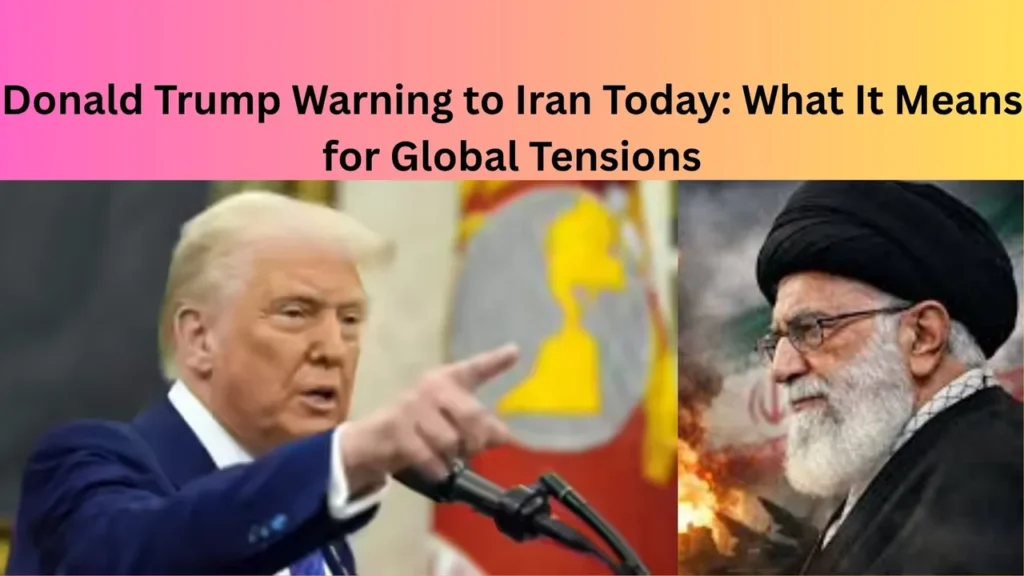
In this article, we’ll dive deep into Trump’s latest warning, the context behind it, how Iran might respond, and what this could mean for the world.
What Did Donald Trump Say to Iran Today?
A Direct and Strong Warning
Donald Trump reportedly issued a firm warning to Iran, signaling that any aggressive actions could lead to serious consequences. His tone? As assertive as ever.
He emphasized that the United States would not tolerate threats or destabilizing behavior in the Middle East. This isn’t the first time Trump has taken a hard stance—but the timing makes it especially significant.
Why Now?
That’s the big question. Why today?
The warning comes amid rising tensions in the region. When things heat up geopolitically, statements like these aren’t random—they’re strategic.
Understanding the Background of US-Iran Tensions
A Long History of Conflict
The relationship between the US and Iran hasn’t exactly been smooth sailing. In fact, it’s been rocky for decades.
From the 1979 Iranian Revolution to nuclear deal disputes, tensions have been simmering for years—sometimes boiling over.
The Nuclear Deal Fallout
One major turning point? The withdrawal of the US from the Iran nuclear deal in 2018 under Trump’s leadership.
That decision changed everything. Since then, trust between the two nations has been fragile at best.
What Triggered This Latest Warning?
Rising Regional Tensions
Recent developments in the Middle East have raised alarms. Whether it’s military activity, proxy conflicts, or political instability—there’s a lot happening behind the scenes.
Trump’s warning seems to be a response to these escalating concerns.
Intelligence and Security Concerns
Governments don’t make statements like this without reason. There are likely intelligence inputs suggesting potential risks or threats.
Think of it like a storm warning—you don’t issue one unless clouds are already gathering.
How Iran Might Interpret the Warning
A Challenge or a Deterrent?
Iran could see this warning in two ways:
- As a challenge that needs a strong response
- Or as a deterrent meant to prevent escalation
Which path they choose will shape what happens next.
Iran’s Past Responses
Historically, Iran has responded strategically rather than impulsively. But that doesn’t mean tensions won’t rise.
Global Reactions to Trump’s Statement
Allies Watching Closely
Countries allied with the US are paying close attention. Any escalation could impact global security, trade, and energy markets.
Neutral Nations Staying Cautious
Other countries are likely adopting a wait-and-see approach. No one wants to get caught in the crossfire of a geopolitical conflict.
Impact on Middle East Stability
A Region Already on Edge
The Middle East is no stranger to conflict. Adding another layer of tension is like pouring fuel on a fire.
Potential for Escalation
Even a verbal warning can lead to real-world consequences—especially in such a sensitive region.
Economic Implications of Rising Tensions
Oil Prices Could Surge
Here’s where things get real for everyday people.
If tensions escalate, oil prices could rise. Why? Because the Middle East is a major oil-producing region.
Global Markets May React
Stock markets don’t like uncertainty. Even the hint of conflict can cause fluctuations.
Military Implications: Should We Be Concerned?
Increased Military Presence
Warnings like these often lead to heightened military readiness.
It’s like when two rivals stare each other down—both sides prepare, just in case.
Risk of Miscalculation
One wrong move, one misunderstanding—and things could spiral quickly.
Political Implications in the United States
Trump’s Strategic Messaging
Is this warning purely about foreign policy—or is there a domestic angle too?
Trump has always been known for strong, bold statements. This could also be about reinforcing his stance on national security.
Impact on Public Opinion
Such statements often influence how people perceive leadership strength and global positioning.
Media Coverage and Public Perception
Headlines vs Reality
Media outlets tend to amplify strong statements. But it’s important to separate facts from sensationalism.
Social Media Buzz
Let’s be honest—social media thrives on drama. This topic is already trending, with opinions flying in every direction.
Could This Lead to Conflict?
Worst-Case Scenario
In the worst case, tensions could escalate into military conflict.
But let’s not jump to conclusions—warnings are often meant to prevent that.
Best-Case Scenario
Ideally, this warning acts as a deterrent, cooling things down rather than heating them up.
Diplomatic Options Moving Forward
Backchannel Negotiations
Behind the scenes, diplomacy often continues even when public statements are tough.
International Mediation
Global organizations or neutral countries might step in to ease tensions.
Lessons from Past US-Iran Conflicts
History Repeats Itself?
We’ve seen similar situations before. And while history doesn’t always repeat itself, it often rhymes.
Importance of Communication
Clear communication can prevent misunderstandings—and potentially avoid conflict.
What Should You Watch Next?
Key Indicators
Keep an eye on:
- Official statements from Iran
- Military movements
- Diplomatic meetings
Why It Matters to You
Even if you’re not into politics, global events like this can affect your daily life—fuel prices, economy, and more.
Final Thoughts: A Moment That Matters
So, what does Donald Trump’s warning to Iran today really mean?
It’s a signal. A message. A move on the global chessboard.
Whether it leads to escalation or de-escalation depends on what happens next. But one thing is clear—this isn’t just another headline. It’s a moment that could shape the near future of international relations.
Conclusion
In a world where a single statement can ripple across continents, Donald Trump’s warning to Iran is more than just political rhetoric—it’s a strategic move with potential global consequences. While tensions remain uncertain, the hope is that diplomacy prevails over conflict. As observers, staying informed is our best tool to understand what’s unfolding and how it may impact us.
FAQs
What did Donald Trump say to Iran today?
Trump issued a strong warning indicating that the US would not tolerate aggressive actions from Iran and that there could be serious consequences.
Why is this warning important?
It comes during a time of rising tensions in the Middle East, making it a potentially significant geopolitical development.
Could this lead to war?
While it’s possible, warnings are often meant to prevent conflict rather than start one.
How might this affect global markets?
Tensions could lead to higher oil prices and market volatility due to uncertainty.
What should we watch for next?
Look for responses from Iran, changes in military activity, and any diplomatic efforts to ease tensions.