
Protests have always been a powerful way for people to express their opinions. But every now and then, a protest grabs attention not just for its message—but for how that message is delivered. Recently, a banner reading “Not a king, he’s your daddy” flew over a protest involving Donald Trump, sparking heated reactions across social media and political circles.
So what does this unusual slogan mean? Why did it resonate with some and anger others? And what does it tell us about modern political protests?
Let’s break it all down in a way that actually makes sense.
What Happened at the Protest?
A Banner That Stole the Spotlight
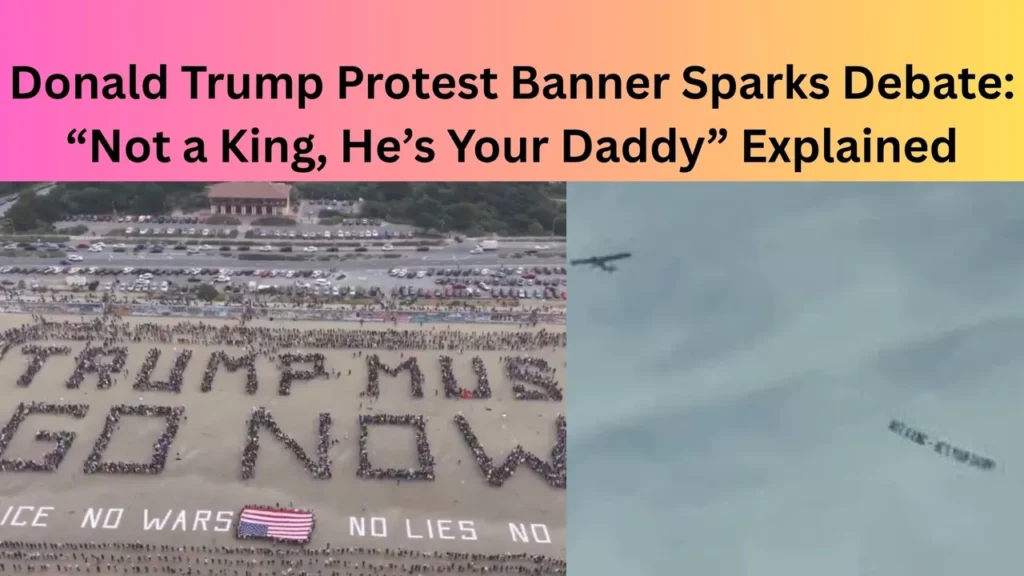
During a public demonstration, a plane flew overhead carrying a bold banner with the phrase “Not a king, he’s your daddy.” It didn’t take long for photos and videos to go viral.
People on the ground paused. Some laughed. Others were confused. And many were offended.
But one thing is certain—it got attention.
Why This Protest Matters
This wasn’t just another protest sign lost in a crowd. It was designed to provoke emotion, spark conversation, and most importantly, go viral. And it worked.
In today’s digital world, protests aren’t just happening on the streets—they’re happening online too.
Understanding the Message Behind the Banner
“Not a King” – A Political Statement
The phrase “not a king” clearly challenges the idea of authority. Critics of Donald Trump have often accused him of behaving in an authoritarian way—like someone who wants too much control.
This part of the message is straightforward: it rejects the idea of any leader acting above democratic limits.
“He’s Your Daddy” – Satire or Insult?
Now here’s where things get interesting.
Calling someone “your daddy” can mean different things depending on context. In this protest, it seems to mix sarcasm with mockery. It suggests blind loyalty among supporters—almost like followers who obey without question.
Think of it like saying: “Why are you treating him like someone you can’t challenge?”
Why Humor Is Used in Protests
Humor is like sugar coating—it makes a strong message easier to swallow, but it can also sting more.
Using satire in protests isn’t new. It grabs attention, makes people think, and sometimes spreads faster than serious messages.
But it can also backfire.
The Role of Social Media in Amplifying the Protest
Viral Within Minutes
Once the banner appeared, social media platforms lit up. Videos, memes, and debates flooded timelines.
Platforms like Twitter (now X), Instagram, and Facebook turned a local protest into a global conversation almost instantly.
Divided Reactions Online
Not surprisingly, people had very different reactions:
- Some found it clever and humorous
- Others saw it as disrespectful and offensive
- Many debated what it even meant
It’s like throwing a stone into water—the ripples just keep spreading.
Political Protests in the Modern Era
From Signs to Sky Messages
Protests have evolved over time. What used to be handwritten signs and chants has now become something much bigger.
We now see:
- Drone displays
- Projected messages on buildings
- Airplane banners like this one
It’s all about visibility and impact.
Why Creativity Matters in Protests
Let’s be honest—people scroll fast these days.
If a protest message doesn’t stand out, it gets ignored. Creative tactics like this banner are designed to stop people mid-scroll and make them think.
Supporters vs Critics: A Nation Divided
How Trump Supporters Reacted
Many supporters of Donald Trump viewed the banner as disrespectful and unnecessary.
For them, it wasn’t just criticism—it felt like a personal attack.
How Critics Responded
On the other hand, critics praised the creativity and boldness of the message. They saw it as a clever way to highlight concerns about leadership and loyalty.
The Bigger Picture
This divide reflects something deeper—it shows how polarized political opinions have become.
It’s no longer just disagreement; it’s emotional, personal, and intense.
The Psychology Behind Provocative Messaging
Why Controversy Gets Attention
Let’s face it—calm, polite messages rarely go viral.
Controversy acts like a magnet. It pulls people in, whether they agree or not.
Emotional Triggers in Political Messaging
Messages like this one trigger emotions:
- Anger
- Humor
- Confusion
- Curiosity
And when people feel something strongly, they’re more likely to engage, share, and react.
Freedom of Speech vs Respect
Where Do We Draw the Line?
This protest raises an important question: just because you can say something, does it mean you should?
Freedom of speech allows people to express opinions—even controversial ones. But it also comes with responsibility.
The Debate Continues
Some argue that satire is essential in democracy. Others believe there should be limits when it comes to respect.
There’s no easy answer here.
Media Coverage and Public Perception
How News Outlets Reported It
Different media outlets covered the protest in different ways:
- Some focused on the humor
- Others emphasized the controversy
- A few ignored it completely
This shows how media framing can shape public opinion.
The Power of Headlines
A headline can make or break a story. In this case, the unusual wording of the banner made it irresistible for coverage.
Historical Context: Protests and Satire
Not the First Time
Political satire has been around for centuries. From cartoons to comedy shows, leaders have always been mocked.
Why It Still Works Today
Even in a serious political climate, humor remains one of the most effective tools for criticism.
It’s like a mirror—it reflects reality but in a way that makes people look twice.
The Impact on Trump’s Image
Does It Change Public Opinion?
Probably not drastically.
People who support Donald Trump are unlikely to change their views because of a banner. The same goes for critics.
But It Keeps the Conversation Alive
What it does do is keep the conversation going. And in politics, staying relevant is half the battle.
Lessons from the Protest
What Activists Can Learn
This protest shows that:
- Creativity gets attention
- Humor can amplify a message
- Controversy increases reach
What Leaders Can Learn
Leaders need to understand how they are perceived—not just in speeches, but in public imagination.
Is This the Future of Protests?
More Bold, More Viral
As technology evolves, protests will likely become even more creative and attention-grabbing.
The Risk of Going Too Far
But there’s always a risk. If a message crosses a line, it can overshadow the cause itself.
Conclusion: A Banner That Said More Than Words
The “Not a king, he’s your daddy” banner was more than just a slogan—it was a snapshot of modern political expression.
It showed how protests are changing, how messages are crafted for viral impact, and how deeply divided opinions can be.
Love it or hate it, one thing is clear: it got people talking. And in today’s world, that’s often the goal.
FAQs
What did the “Not a king, he’s your daddy” banner mean?
The banner combined political criticism with satire, suggesting that some supporters treat Donald Trump with unquestioning loyalty, while also rejecting the idea of authoritarian leadership.
Why did the protest go viral?
Its unusual and provocative wording grabbed attention quickly, making it highly shareable on social media platforms.
Was the banner considered offensive?
Yes, many people found it disrespectful, while others saw it as humorous political satire.
Are such protest methods common today?
Creative protest methods like aerial banners and viral messaging are becoming more common as activists try to stand out in a crowded media landscape.
Did the protest have any real impact?
While it may not have changed political opinions significantly, it succeeded in sparking widespread discussion and keeping the topic in public focus.