
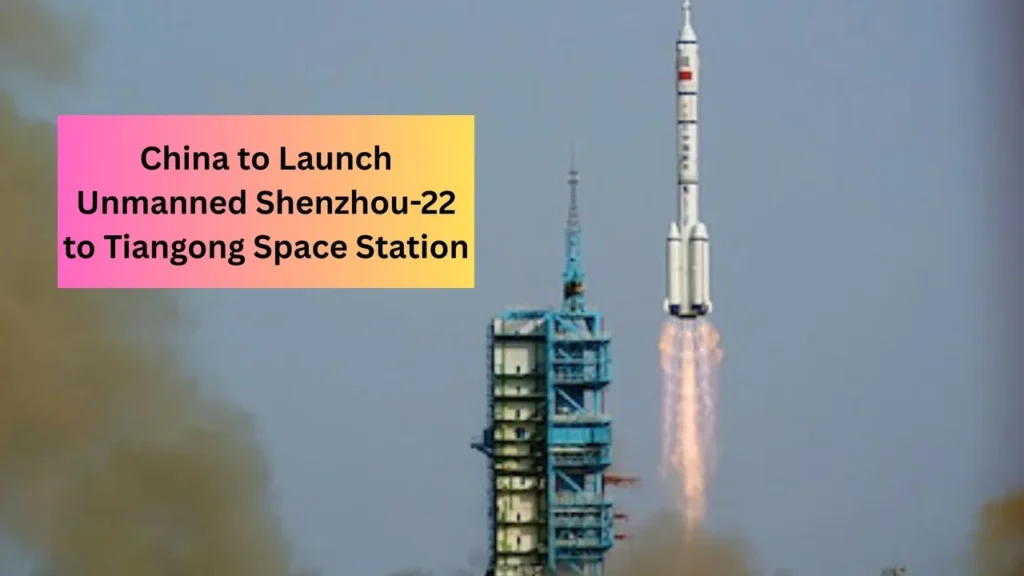
China is making headlines in the space world once again. On 25 November 2025, the country plans to launch Shenzhou-22, but with a twist — this time, the spacecraft will be unmanned. It’s not just about sending supplies; it’s a bold move to shore up its space station safety systems after recent setbacks. In this article, we’ll walk you through why this mission is happening, what led to this decision, and what it means for China’s space ambitions.
Background: China’s Tiangong Space Station
What Is Tiangong?
Tiangong (“Heavenly Palace”) is China’s modular space station in low-Earth orbit. Built and operated by the China Manned Space Agency (CMSA), it’s China’s answer to missions like the International Space Station (ISS), but fully under national control. The core module, Tianhe, supports astronauts for months at a time, and China has been steadily rotating crews via the Shenzhou spacecraft.
The Role of Shenzhou Missions
Shenzhou spacecraft are China’s workhorses for ferrying astronauts to and from Tiangong. Historically, these missions have carried crew, but they also serve as lifeboats — escape vehicles in emergencies. Each rotation ensures that there is always a return vehicle co-docked at the station.
What Just Happened — The Incident That Changed Plans
Damage to Shenzhou-20
In early November 2025, the Shenzhou-20 spacecraft, which was docked to Tiangong, reportedly suffered damage — possibly from space debris. This was more than just a scratch: sources suggest a crack in a window, raising safety concerns.
Stranded Crew and Emergency Measures
Because of this damage, the Shenzhou-20 crew could not return in their original capsule. Instead, they returned to Earth in the more recently docked Shenzhou-21 spacecraft. This maneuver left the three astronauts of the Shenzhou-21 mission — Zhang Lu, Wu Fei, and Zhang Hongzhang — without a lifeboat docked.
Enter Shenzhou-22 — The Unmanned Lifeboat Mission
What Is the Shenzhou-22 Mission?
Originally, Shenzhou-22 was planned as a crewed mission around April 2026. But after the unexpected incident with Shenzhou-20, its role has pivoted: it will launch unmanned to serve as a lifeboat and supply ship.
Cargo, Supplies, and Provisions
Shenzhou-22 isn’t just a shell — it’s loaded with provisions, food, and equipment for the astronauts on Tiangong. A senior engineer with CMSA revealed that all relevant systems are being tested, from rocket to payload. China Daily This mission ensures that the crew aboard Tiangong has essential supplies even as a backup vehicle in orbit.
Why This Mission Is Critical
Restoring Safety and Redundancy
With the damage to Shenzhou-20, China’s standard redundancy — having a return capsule always ready — was compromised. Launching Shenzhou-22 unmanned restores that safety buffer. Experts see this as a prudent step to avoid a “crew stranded” scenario.
Maintaining Operational Cadence
Space station operations depend on regular crew rotations. By launching Shenzhou-22, China ensures that even if something goes wrong, the station continues to function with a reliable return vehicle in place. This avoids mission delays and keeps the station safely crewed.
The Launch — When and How
Launch Date and Vehicle
The launch is scheduled for 25 November 2025, using a Long March 2F rocket from the Jiuquan Satellite Launch Center in northwest China. Wikipedia This is the same rocket type China has used for previous Shenzhou crewed missions.
Docking with Tiangong
Once in orbit, Shenzhou-22 will rendezvous and dock with the forward (nadir) port of the Tianhe module of Tiangong. Wikipedia This is a fully automated docking maneuver.
What Happens to the Damaged Shenzhou-20?
Undocking and De-orbit Plans
China has not yet publicly confirmed all the details, but experts suggest that the damaged Shenzhou-20 capsule could be undocked from Tiangong and de-orbited over the Pacific Ocean. De-orbiting into a remote area is a typical way to dispose of spacecraft safely.
Safety Inspections and Risk Assessment
Before undocking, ground engineers are likely conducting detailed assessments of the damage, especially the cracked window. The goal is to make sure de-orbiting is safe and controlled, minimizing risks associated with re-entry.
Implications for China’s Space Program
Strengthening Space Station Resilience
This mission underscores how resilient and mature China’s space station program has become. By swiftly adapting and using Shenzhou-22 as a backup, China demonstrates it has the operational flexibility and technical infrastructure to manage surprises.
Building Credibility Globally
Successfully launching an unmanned rescue/resupply mission boosts China’s credibility in space. It signals to the world that its Tiangong station is reliable and that China is serious about long-term habitation and crew safety.
A Step Toward Future Missions
This isn’t just about damage control. The mission could pave the way for more ambitious logistics missions — cargo resupply, crew rotations, and even possibly international partners using Tiangong in the future.
Risks and Challenges
Orbital Debris
The initial problem — damage to Shenzhou-20 — was likely caused by space debris, a growing concern for all spacefaring nations. The Guardian Preventing future impacts will continue to be a high priority.
Technical Complexity
Launching a crew capsule unmanned and turning it into a cargo-lifeboat hybrid isn’t trivial. It demands precise testing, validation, and mission planning.
Psychological Factor for Astronauts
Having a backup capsule in orbit may reassure astronauts, but the psychological strain of knowing you once lost your return vehicle isn’t negligible. It’s a reminder of just how risky spaceflight remains.
Comparing with Other Space Programs
How Does This Stack Up Against ISS Protocols?
In the U.S. and Russian space programs (e.g., ISS missions), having an available return vehicle is standard. China’s move to launch an unmanned lifeboat aligns with established safety norms, albeit using its own indigenous hardware.
Innovation vs. Precedent
Rather than relying on a dedicated cargo ship (like Progress in Russia), China is repurposing its crew variant, which is innovative — but also a reflection of its limited but capable fleet of spacecraft.
What’s Next for Tiangong After Shenzhou-22
Crewed Return of Shenzhou-21 Crew
With Shenzhou-22 docked, the Shenzhou-21 astronauts (Zhang Lu, Wu Fei, Zhang Hongzhang) will now have a safe way to return after completing their mission — likely around April 2026, according to reports.
Future Missions: Shenzhou-23 and Beyond
Once the Shenzhou-21 crew has returned, China is expected to continue with Shenzhou-23, resuming its regular crew-rotation cadence.
Continued Station Supply
Beyond crew lifeboats, Shenzhou-22 may also carry equipment and experimental supplies, helping Tiangong sustain operations as China ramps up its orbital ambitions.
Strategic Importance for China
Reinforcing National Pride
This mission is not just a technical necessity — it also fuels national pride. Space exploration is a centerpiece of China’s modern scientific identity, and handling a crisis like this well plays into that narrative.
Independence in Space
Unlike many countries that rely on international cooperation (like ISS partners), China is operating independently in low Earth orbit. Shenzhou-22 as a backup lifeboat highlights how seriously China takes self-reliance in its human spaceflight program.
Long-Term Space Goals
China’s long-term goals include lunar missions and possibly a larger orbital presence. Demonstrating robust in-orbit contingency planning now builds trust in its ability to execute even bigger plans in future.
Conclusion
The upcoming unmanned launch of Shenzhou-22 to the Tiangong space station is a clear signal: China is serious about crew safety, mission continuity, and resilience in its space program. What began as an unplanned backup has become a pivotal mission in its own right — a lifeboat, a supply ship, and a testament to China’s growing sophistication in space operations. As the mission unfolds, it will likely become an important case study for how national space agencies can adapt quickly to unexpected challenges. For China, it’s not just damage control — it’s a stepping stone toward a more confident, independent foothold in space.
FAQs
1. Why is Shenzhou-22 being launched without a crew?
After damage was detected in the Shenzhou-20 capsule, China decided to launch Shenzhou-22 unmanned to serve as a lifeboat and supply ship for safety, rather than risking a crewed flight now.
2. What caused the damage to Shenzhou-20?
Reports suggest that the Shenzhou-20 spacecraft was struck by small space debris, leading to a suspected crack in its window, which raised safety concerns.
3. When is Shenzhou-22 supposed to dock with Tiangong?
The mission is scheduled to dock on the same day as launch — 25 November 2025 — using fully automated rendezvous and docking systems.
4. What will happen to the damaged Shenzhou-20 capsule?
Experts believe that Shenzhou-20 will be undocked from Tiangong and de-orbited, possibly over the Pacific Ocean, in a controlled manner.
5. How does this mission impact China’s long-term space ambitions?
Shenzhou-22 strengthens China’s redundancy and safety in orbit, signals reliability in its space station operations, and supports its vision of longer-term human spaceflight, including future rotations, lunar missions, and independent orbital infrastructure.