
The Angel Tree program is run by The Salvation Army. Each December, they put up “Angel Trees” at participating malls, stores (like many of their partner retailers), and community centers. On these trees, paper tags — each representing a child (or senior) in need — hang as “angels.” The tags list simple wishes or necessities: toys, clothing, coats, shoes, hygiene items, or basic essentials.
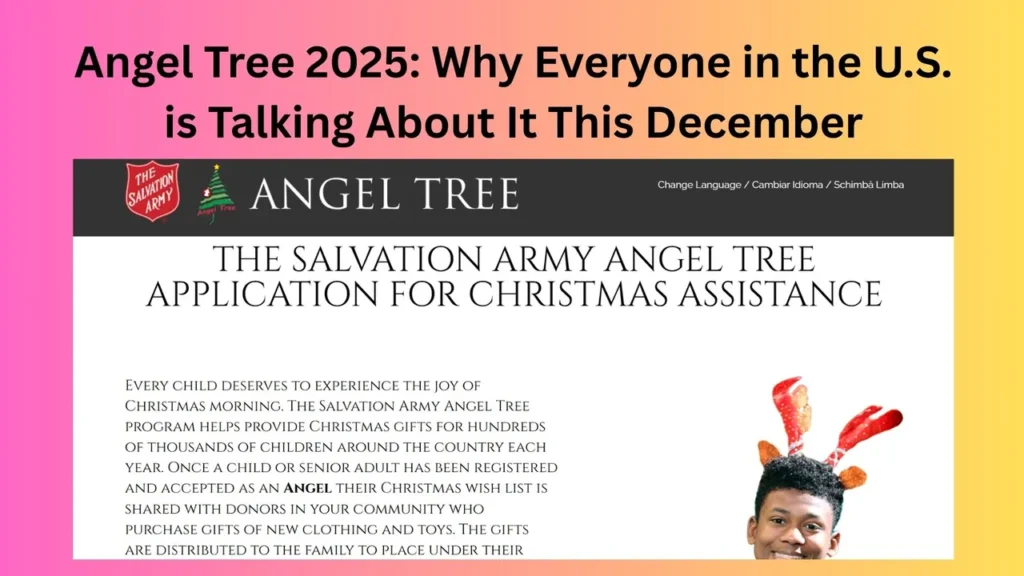
Volunteers or generous strangers “adopt an angel,” take a tag, shop for the requested items and return them — unwrapped — to the collection point. The Salvation Army then wraps and distributes the gifts so children and families receive something meaningful on Christmas morning.
Historically, Angel Tree has helped over a million children every holiday season who otherwise might go without gifts or essentials.
So essentially — it’s a tradition of community generosity, secret gift-giving, and holiday hope.
Why Angel Tree Is Trending This December 2025
1. Surge in Participation & Need
Recent reports suggest the 2025 Angel Tree has expanded across many U.S. cities: from small towns to major urban centers. Places like San Angelo, Midland/Odessa, Lubbock, and others are participating, and in some areas the number of children and seniors needing help has increased compared to previous years.
For example, one community recently launched their local Angel Tree for 725 children, another locality is supporting thousands — showing the scale of need across the country.
2. Social Media + Influencer Buzz
In past years — and increasingly again this season — the Angel Tree program has exploded on social media. Especially on platforms like TikTok, people began to post “Angel Tree hauls”: videos of picking a tag, buying gifts for a child in need, and sometimes filming the gift wrapping and delivery process.
These videos have racked up millions of views. One early influencer reportedly got tens of millions of views for her Angel Tree haul video — inspiring many to join in.
As a result, Angel Tree has transformed from a quiet charitable tradition to a widely visible cultural moment — often shared, discussed, and criticized online.
3. Increased Volunteer & Community Involvement
Because of the online visibility, more people (who may not normally volunteer or donate) are getting involved. Local groups, student clubs, businesses and even small organizations are hosting Angel Trees or collaborating with The Salvation Army to help distribute gifts — sometimes reaching hundreds of children in a neighborhood.
In one recent case, a local region distributed gifts to over 2,100 children thanks to donors and volunteers.
What’s the Process Like — Step by Step
- The Salvation Army (or a partner) sets up an Angel Tree in a public space (mall, big-box store, community center).
- Each paper angel tag lists a child or senior’s gender, age (or size), and a small wish list (toy, clothes, shoes, hygiene items, etc.).
- A donor picks a tag, buys the requested items, and returns them unwrapped to the drop-off location (or uses online registry where available).
- Volunteers sort, wrap, and distribute the gifts to families, often in time for Christmas.
Simple process, but the impact can be huge — especially for families who otherwise may not afford holiday gifts.
Heartfelt Impact: Stories from Around the U.S.
- In Bay County (Florida), the latest round of Angel Tree programs saw 300 more families sign up in 2025 compared to last year — showing rising demand. Many parents were reportedly moved to tears when they picked up gifts for their children.
- In a small Texas community (San Angelo), organizers said over 700 children will receive gifts this holiday season thanks to Angel Tree donors.
- In counties served by The Salvation Army, more than 1 million children nationwide received holiday gifts through Angel Tree — a staggering number that reminds us how many families depend on such generosity.
For many kids, these gifts aren’t just toys — they’re hope, dignity, and a sense that someone cares. For parents facing tough times, Angel Tree can lift burdens just when it’s hardest.
The Other Side: Controversies & Criticisms
But — unlike the purely heartwarming stories — the rise of Angel Tree on social media has also invited criticism and debate.
Performative Charity and “Content for Clout”
What began as quiet anonymous giving now sometimes looks like content creation. As one recent article pointed out, some donors appear more interested in showing off what they bought than genuinely helping. The act of “unboxing gifts for needy kids” has drawn accusations of virtue-signaling or turning charity into a spectacle.
Former beneficiaries — people who received gifts through Angel Tree when they were children — have spoken up about how such displays made them feel watched or judged, and sometimes uncomfortable.
Judgment & Conflict Over Gift Choices
Because tags list wish-items, donors sometimes misinterpret or overspend — or “go overboard.” Others may “skimp.” Social media comments around these posts often devolve into judgmental debates: Did you spend too much? Too little? Did you get the right items? This pressure can overshadow the true spirit of the program: kindness.
Risk of “Charity as Performance” overshadowing Real Need
Some critics argue that when charity becomes content, the focus shifts from helping to being seen helping. That may discourage people who don’t want to post online — or make recipients feel like they’re being displayed for likes. In other words: sincerity gets overshadowed by optics.
Angel Tree 2025 — What’s Different This Year?
This December, a few evolving trends are shaping Angel Tree more than ever:
- Broader reach: More cities, more seniors + children added — not just kids. In some places, seniors are also getting “angel tags.”
- Hybrid giving: Apart from in-store Angel Trees, online options via partner registries (like retail partners) allow donors to buy gifts remotely.
- Social-media amplified visibility: More people are learning about Angel Tree thanks to videos and posts — reaching audiences that wouldn’t have known otherwise. That means potentially more generosity — but also more scrutiny.
The result: Angel Tree is no longer just a local, quiet charitable tradition — it’s become a national seasonal movement, visible on our screens, in our malls, and in communities everywhere.
Why Angel Tree Still Matters — Despite the Hype and Critique
A. Real, Tangible Help for Families in Need
For families struggling through economic hardship, inflation, or unexpected bills — Angel Tree isn’t about showy generosity. It’s about providing basic comfort: clothes, toys, warmth, and a little hope.
B. Community Building & Shared Responsibility
The program brings together strangers: donors, volunteers, local businesses, nonprofits. It’s a tangible demonstration that society can — and does — step in for its most vulnerable members.
C. Spreading Awareness — Especially Among Younger Generations
Thanks to TikTok and other social platforms, younger people now see holiday giving in a new light. Even if the presentation can be flashy, the message — that you don’t need a lot to make a difference — still reaches millions.
D. Flexibility to Adapt — Seniors, Virtual Donations, Corporate Support
As needs change, Angel Tree adapts. In 2025, that means seniors are included, online registries exist for remote donations, and corporate partners help scale the operation to reach more communities.
How You Can Get Involved (Even Outside the U.S.)
Even if you’re not based in the U.S., you can support similar efforts or draw inspiration for local holiday giving traditions.
- Share awareness: Talk about Angel Tree on social media, spread the word among friends or communities. Sometimes all it takes is visibility for someone to take action.
- Donate to local charities: Many countries have holiday toy drives, charity gift-giving, or community donation events — look for programs that welcome help.
- Promote respect and dignity: Encourage anonymous donations, avoid publicizing recipients’ personal details, and respect privacy. Gifts should uplift, not spotlight.
- Volunteer or contribute funds: Money, essentials (clothes, toys), or time — even small contributions add up.
Final Thoughts: Angel Tree in 2025 — Hope, Giving & Complexity
This holiday season, Angel Tree stands at a crossroads. On one hand — it’s growing, expanding, helping more children and seniors than ever. On the other — it’s tangled in social-media optics, judgment, and debates about sincerity vs performance.
But maybe that’s not a bad thing. Maybe visibility — even imperfect — reminds us how many people quietly need help. Maybe the social-media buzz nudges people into generosity who otherwise wouldn’t have thought twice.
At its heart, Angel Tree remains a powerful reminder: during a season of lights, celebrations, and spending — sometimes the best gift is kindness.
Frequently Asked Questions (FAQs)
1. How many children does Angel Tree help each year?
The program serves more than a million children nationally annually, providing gifts, clothes, and festive essentials that many families could not otherwise afford.
2. Can I participate online if there’s no Angel Tree near me?
Yes. Many partner retailers and The Salvation Army offer online “adopt an angel” or registry options, which allow donors to shop remotely and have gifts delivered directly.
3. Are seniors included in 2025 Angel Tree campaigns?
Yes — some 2025 programs explicitly include seniors, besides children, recognizing that older adults in need also benefit greatly from holiday support.
4. Why are people criticizing Angel Tree social-media posts?
Critiques focus on “performative charity” — when giving becomes more about showing off than helping. Some past recipients have said publicizing donations made them feel judged or exposed.
5. How can I help responsibly without making it about social media likes?
If you want to help genuinely: pick a tag, buy requested items, donate anonymously, avoid posting recipients’ details, and treat giving as a humble, personal act of kindness rather than content fodder.