
Today marks a dramatic escalation in Middle Eastern tensions as Israel launched one of its biggest attacks on Iran in recent history, in coordination with the United States. These strikes, widely reported both internationally and regionally, have shaken the geopolitical landscape and triggered immediate military responses from Tehran. Both sides are now in a volatile standoff that could shape the future of the region and beyond.
In this article, we’ll break down what’s happening, why it matters, who’s involved, and what’s next — all in simple, clear terms so you can understand this complex situation.
Background: A Conflict Years in the Making
Long-standing Tensions Between Israel and Iran
Israel and Iran have been regional rivals for decades, with deep strategic and ideological differences. At the heart of the hostility are disputes over Iran’s nuclear program, its support for armed groups opposed to Israel, and mutual distrust.
Because of this history, occasional skirmishes and proxy conflicts have occurred. But today’s events go far beyond anything seen in recent years.
Failed Diplomacy and Rising Friction
Earlier talks in 2026 between Iran and international mediators, including the United States, failed to secure an agreement to limit Iran’s nuclear ambitions. With diplomatic solutions faltering, military options gained traction — and tensions escalated into open conflict.
The Israel Attack on Iran Today
Operation Lion’s Roar: The Name Behind the Strikes
The coordinated attacks were officially dubbed Operation Lion’s Roar by the Israeli government. This large-scale offensive involved air and missile strikes targeting Iranian military, missile, and nuclear facilities.
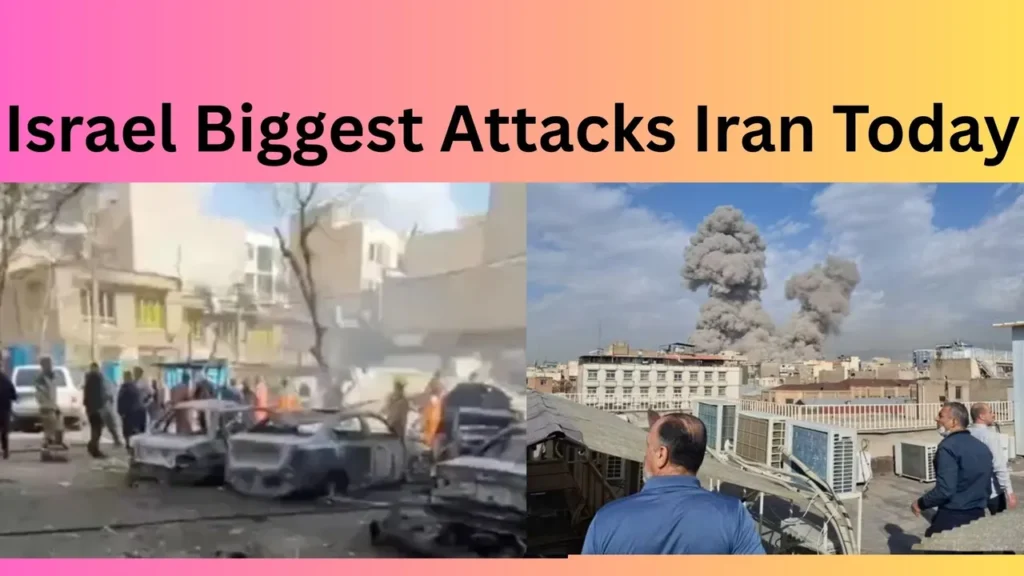
According to reports, explosions were widely seen and heard across Tehran and other cities — with smoke rising over the capital and other regions as the strikes unfolded.
What Was Targeted?
While details are still unfolding, initial reports indicate the attacks focused on:
- Military infrastructure
- Missile sites
- Defense installations
- Government-linked facilities
Some reports also suggest that civilian infrastructure may have been impacted, raising serious humanitarian concerns.
U.S. Support and Involvement
The United States participated in the operation alongside Israel. U.S. President Donald Trump publicly announced the start of “major combat operations” and stressed that the strikes aimed to eliminate perceived threats from the Iranian regime.
This cooperation underscores the seriousness of the offensive and reflects the strategic alignment between Israel and the U.S. on containing Iranian influence.
Iran’s Immediate Response
Missile and Drone Retaliation
Not long after the strikes began, Iran launched missiles and drones in response — hitting multiple targets, including Israeli territory and U.S. military bases in the region. This swift retaliation signals how quickly the conflict has escalated from air strikes to active exchanges.
Widening The Conflict Across the Region
In addition to strikes on Israel, Iranian missiles reportedly soared toward Gulf Arab states that host U.S. or allied military assets. Some missiles were intercepted; others caused damage and casualties, including a reported fatality in Abu Dhabi.
This broadening of the conflict dramatically increases the risks of a regional war involving multiple countries.
Civilian Impact and Emergencies
Schools, Hospitals, and Public Safety
The human cost of this conflict is already manifesting. Reports indicate civilian infrastructure — including a school in southern Iran — was hit, resulting in tragic loss of life, including children.
On the Israeli side, civil defence systems are active, and public alerts have prompted schools and businesses to close as safety measures.
Communication and Airspace Disruptions
Iran has shut down its airspace, and Israel has closed its own civilian airspace in response to security threats. This signifies how disruptive the conflict has become to everyday life.
Key Players in Today’s Conflict
Understanding who’s involved helps make sense of the situation.
Israel Defense Forces (IDF)
Israel’s military launched the air and missile strikes, seeing Iran’s capabilities as an existential threat. Leadership in Jerusalem has framed the operation as defensive and preemptive.
Islamic Republic of Iran
Iran’s government and military structures are both targets and responders in this conflict. The country has vowed strong retaliation for the Israeli attack.
United States Role
The U.S. played a significant role, working with Israel to plan and execute the strikes. American forces are also being targeted in the retaliation.
Gulf Arab States and Others
Countries like the UAE, Qatar, and others are caught in the conflict because of their strategic ties with the U.S., hosting military bases and infrastructure under threat from Iranian missiles.
Why This Matters Globally
Energy Market Turmoil
Iran sits on huge oil and gas reserves. Any conflict in its territory can disrupt global energy supply expectations, potentially driving up prices and affecting economies worldwide.
Regional Stability at Risk
A localized conflict between two nations can escalate into a larger Middle East war involving neighboring states and global powers — a situation the world cannot afford.
Diplomatic and Military Escalation
With diplomacy faltering, military options are taking precedence. This lays bare how fragile global peacemaking can be in the face of entrenched geopolitical disputes.
What Could Happen Next?
Right now, we’re in an active and fluid conflict situation. Some possible next steps include:
Prolonged Warfare
If neither side backs down, this could become a long-term military conflict with high casualties.
International Mediation Efforts
Countries like Oman and organizations like the UN may attempt to intervene diplomatically to prevent further escalation.
Wider Involvement of Other Actors
Allies of Iran or Israel could get drawn in, intentional or not, especially if missile strikes expand.
Conclusion
Today’s coordinated attack by Israel and the United States on Iran represents one of the most significant escalations in recent Middle Eastern history. With strikes on Iranian cities, swift retaliation, civilian casualties, and regional ramifications, the fallout from this offensive is just beginning to unfold. This conflict goes beyond headlines — it impacts regional security, global energy markets, and the prospects for peace in one of the world’s most volatile regions.
Stay tuned to trusted news sources for real-time updates as this situation continues to evolve.
Frequently Asked Questions
1 – What triggered the Israel attack on Iran today?
The attack followed failed diplomatic talks to limit Iran’s nuclear capabilities and rising strategic tensions. Israel, with U.S. support, initiated military strikes to neutralize what it sees as an imminent threat.
2 – What is Operation Lion’s Roar?
Operation Lion’s Roar is the name given to the joint Israeli-U.S. military strikes launched today against Iranian targets in Tehran and other cities.
3 – Has Iran responded to the attacks?
Yes. Iran launched retaliatory missile and drone strikes against Israel and U.S. bases, marking a rapid escalation in hostilities.
4 – Are civilians being affected by this conflict?
Reports indicate civilian infrastructure, including schools, has been hit with tragic consequences, and people in both countries are subject to emergency measures.
5 – Could this conflict become a larger regional war?
There is a real risk of wider escalation involving Middle Eastern states and global powers, especially if diplomatic solutions are not pursued.