
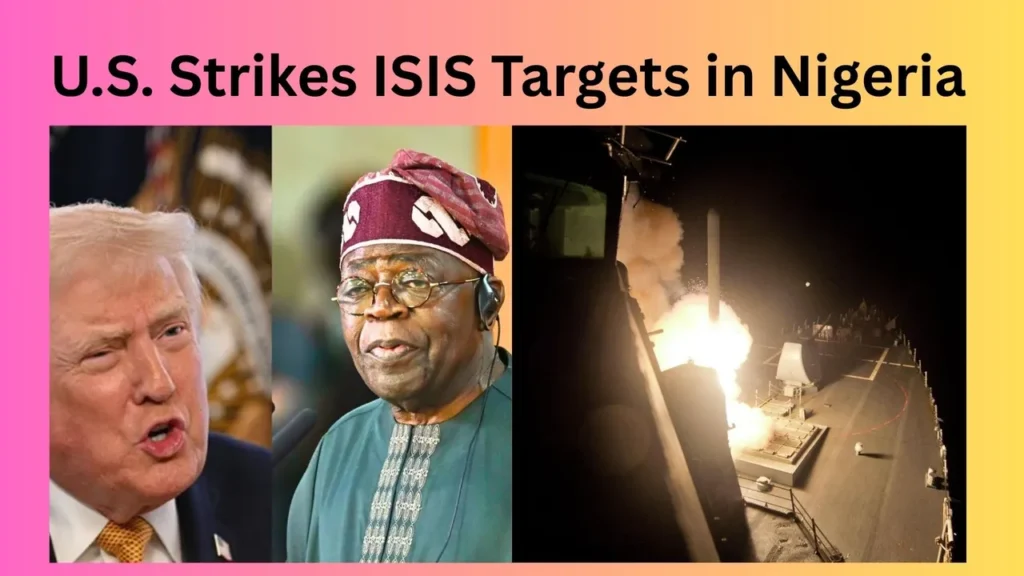
The global fight against terrorism has once again shifted attention to West Africa. Recent reports confirm that the U.S. has carried out strikes against ISIS-linked targets in Nigeria, signaling a serious escalation in efforts to curb extremist violence in the region.
But what exactly happened? Why Nigeria? And what does this mean for Africa—and the rest of the world?
Let’s break it all down in plain English.
Understanding the Context: Why Nigeria Matters
Nigeria is Africa’s most populous country and one of its largest economies. When instability hits Nigeria, the ripple effects spread fast—across borders, economies, and global security systems.
For years, terrorist groups like Boko Haram and its offshoot, ISIS–West Africa Province (ISWAP), have exploited weak security zones, poverty, and political instability in northern Nigeria.
Think of the region as dry grass—terrorist ideologies spread like wildfire if left unchecked.
Who Is ISIS–West Africa Province (ISWAP)?
A Dangerous Offshoot of ISIS
ISWAP emerged after splitting from Boko Haram and pledging allegiance to ISIS. Unlike Boko Haram’s earlier chaotic violence, ISWAP adopted more strategic tactics—targeting military bases, looting weapons, and controlling territory.
Why ISWAP Is More Dangerous
- Better coordination
- Advanced weaponry
- Smarter recruitment
- Stronger international links
This evolution made ISWAP a global concern, not just a Nigerian problem.
What Happened in the U.S. Strikes?
Targeted Military Action
The U.S. reportedly conducted precision airstrikes against known ISIS-linked camps and logistical hubs in Nigeria. These were not random bombings. They were calculated moves based on intelligence, surveillance, and reconnaissance.
Focus on High-Value Targets
The strikes aimed to:
- Disrupt terrorist planning
- Eliminate senior commanders
- Destroy weapons stockpiles
- Weaken communication networks
In simple terms, the goal was to cut the head off the snake, not just scare it.
Why Did the U.S. Get Directly Involved?
1. Rising Threat Beyond Nigeria
ISIS-linked groups in West Africa have expanded operations into Niger, Chad, and Cameroon. This growing reach raised red flags for U.S. and allied intelligence agencies.
2. Protection of Global Interests
Nigeria plays a major role in:
- Oil and gas supply
- Regional trade
- Peacekeeping missions
Instability here could destabilize the entire Sahel region.
3. Preventing Another Safe Haven
Remember how ISIS once controlled large parts of Iraq and Syria? The U.S. doesn’t want West Africa becoming ISIS 2.0 headquarters.
Nigeria’s Role in the Operation
Was Nigeria Involved?
While official details remain limited, U.S. strikes of this nature are typically conducted:
- With host nation approval
- In coordination with local forces
- Using shared intelligence
Nigeria has long partnered with the U.S. on counterterrorism training, intelligence sharing, and military support.
How These Strikes Impact Boko Haram
Internal Power Struggles
ISWAP and Boko Haram already have tensions. U.S. strikes weaken ISIS-aligned factions, which could:
- Fragment leadership
- Reduce recruitment
- Cause internal conflict
However, weakened groups can also become more unpredictable, increasing civilian risks.
Civilian Safety and Human Rights Concerns
The Human Cost of Terrorism
Let’s be clear—terrorism has killed tens of thousands of Nigerians and displaced millions. Schools destroyed. Villages burned. Families torn apart.
Concerns About Airstrikes
At the same time, airstrikes raise concerns:
- Civilian casualties
- Displacement
- Infrastructure damage
That’s why precision and intelligence accuracy are critical.
International Reactions to the Strikes
African Union
The AU has consistently urged global support against terrorism in the Sahel and West Africa, while emphasizing respect for sovereignty.
Western Allies
Countries like the UK and France view U.S. involvement as a reinforcement of global counterterrorism efforts.
Terrorist Propaganda
As expected, ISIS-affiliated media attempted to frame the strikes as “foreign aggression”—a predictable narrative.
What This Means for Global Counterterrorism
A Shift in Focus
For years, the spotlight was on the Middle East. Now, Africa is emerging as the new frontline in the war against terrorism.
A Message to Extremist Groups
The strikes send a clear message:
“You can run, but you can’t hide.”
Geography is no longer a shield.
Could This Escalate Further?
Possibility of Retaliation
Terror groups often respond with:
- Suicide attacks
- Kidnappings
- Attacks on soft targets
Security forces in Nigeria and neighboring countries are now on high alert.
Long-Term Commitment?
The U.S. has not indicated large troop deployments. The focus remains:
- Intelligence
- Air support
- Training local forces
Lessons from Past U.S. Counterterrorism Campaigns
What Worked
- Precision strikes on leadership
- Partnering with local forces
- Cutting funding networks
What Didn’t
- Overreliance on military force
- Ignoring economic roots of extremism
- Lack of governance support
Military action alone is like mopping water without fixing the leak.
The Root Causes Still Matter
Why Terrorism Thrives
- Poverty
- Unemployment
- Weak governance
- Corruption
- Lack of education
Unless these issues are addressed, new groups can rise even after successful strikes.
The Bigger Picture for Africa
Africa is young, resource-rich, and full of potential. But instability threatens growth.
If terrorism spreads:
- Foreign investment drops
- Tourism collapses
- Humanitarian crises grow
Stopping ISIS in Nigeria isn’t just about security—it’s about protecting Africa’s future.
What Happens Next?
Short-Term
- Heightened military operations
- Increased intelligence sharing
- Stronger border surveillance
Long-Term
- Regional cooperation
- Economic development programs
- Counter-radicalization efforts
Should the World Be Paying More Attention?
Absolutely.
What happens in Nigeria today could affect:
- Europe tomorrow
- The U.S. next year
- Global trade and security for decades
Terrorism doesn’t respect borders. Ignoring it is like ignoring smoke in your house because the fire started in another room.
Conclusion: A Strategic Strike with Global Implications
The U.S. strikes on ISIS targets in Nigeria mark a significant moment in the global fight against terrorism. While military action alone won’t solve the problem, it plays a crucial role in disrupting extremist networks and protecting civilian lives.
The real victory, however, will come from long-term investment in peace, development, and governance. Without that, the cycle risks repeating itself.
Nigeria stands at a crossroads—and the world has a stake in which path it takes.
Frequently Asked Questions (FAQs)
1. Why did the U.S. strike ISIS targets in Nigeria?
To prevent ISIS-linked groups from expanding, threatening regional stability, and creating a new global terrorism hub in West Africa.
2. Is ISIS active in Nigeria?
Yes. ISIS operates through its affiliate, ISIS–West Africa Province (ISWAP), which split from Boko Haram.
3. Were Nigerian forces involved in the strikes?
While details are limited, such operations typically involve coordination and approval from Nigerian authorities.
4. Will this end terrorism in Nigeria?
No. Airstrikes help weaken groups, but long-term solutions require economic development, governance reforms, and education.
5. Could these strikes lead to retaliation?
There is always a risk. That’s why security forces remain on high alert following such operations.