
Artificial intelligence has already slipped into every corner of our lives. It writes, paints, designs, composes music, even acts in films through digital avatars. As we enter 2026, the big question echoes louder than ever: Will robots replace artists?
Or… will AI instead become the greatest creative tool humans have ever known?
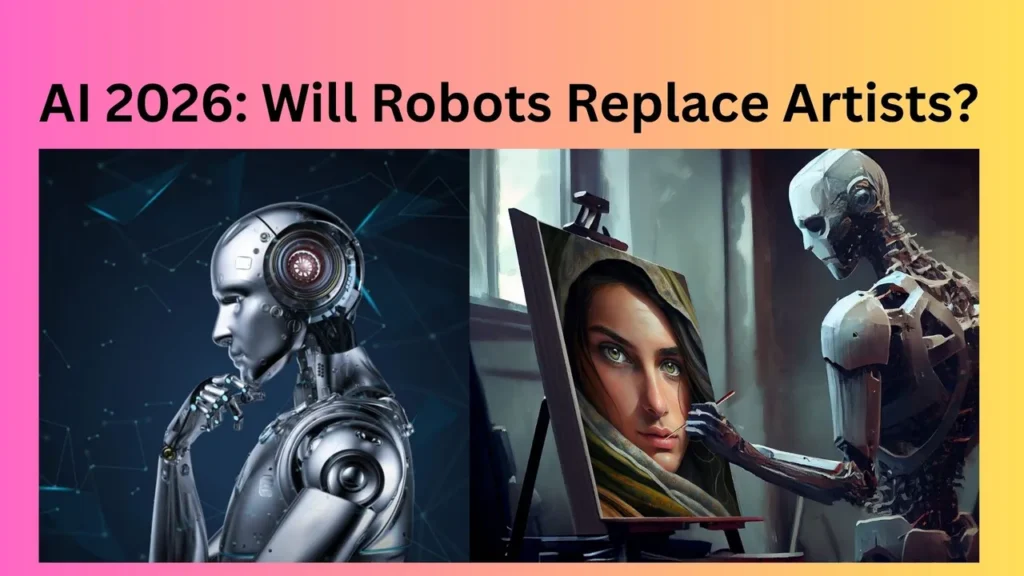
Let’s dive deep into the future of creativity where humans and machines might just share the same canvas.
The Rise of AI Creativity
How Did We Get Here?
Just a decade ago, AI making art seemed like science fiction. Today, apps create stunning illustrations in seconds using just a few words. Tools like image generators, story writers, and music bots exist because AI learns patterns from billions of creative pieces online and builds something new from them.
It’s fast.
It’s cheap.
And sometimes? It’s surprisingly good.
What Makes AI Art So Popular?
- Speed: Art in seconds instead of weeks
- Infinite variations with no fatigue
- Affordable for anyone to access
- A push-button solution for creativity
Businesses love it. Content creators love it. So where does that leave human artists?
Human Creativity vs. Machine Intelligence
What Makes Art… Art?
Art is not just colors and shapes. It is:
- Emotion
- Memory
- Cultural struggle
- Deep personal expression
AI can imitate these elements, but can it truly feel?
Can it bleed heartache into a poem or pour childhood nostalgia into a painting?
Humans create from life.
AI creates from data.
Can AI Think Original Thoughts?
AI doesn’t wake up inspired.
It doesn’t stare out a window dreaming of new worlds.
It relies on what already exists.
So yes, AI is smart. But artists? They are storytellers shaped by experience. That’s something no machine can download.
Where Robots Already Compete With Artists
Let’s be honest. AI is not just assisting creativity—it’s competing.
Graphic Design
Brands now use AI logos and posters. Designers fear shrinking job markets.
Music Production
AI composes background tracks at lightning speed. Great for businesses needing cheap music.
Content Writing
Blog posts, ads, product descriptions—AI can generate millions of words per hour.
Film & Animation
Synthetic actors, generated scripts, virtual cinematography… AI is becoming part of Hollywood.
Artists worry:
If AI is faster and cheaper, will clients still need humans?
Art Jobs Under Pressure
The Hard Truth
Repetitive creative tasks are high-risk jobs:
- Social media banners
- Template-based logos
- Stock illustrations
- Mass-produced music
AI handles volume like a machine (because it is one).
But Not All Art Is Replaceable
High-concept, emotional, soul-driven work will always need humans:
- Fine art exhibitions
- Film direction
- High-end fashion
- Original literature
- Cultural storytelling
Clients still crave the human touch when it really matters.
AI as a Creative Sidekick
What if the question isn’t replacement but partnership?
Imagine:
- A painter using AI to brainstorm styles
- A writer using AI to fight creative block
- A filmmaker using AI to generate worlds
Machines can give momentum.
Humans provide the meaning.
AI is the brush.
Artists are the heart holding it.
Why Artists Should Not Fear 2026
Humans Have Something Machines Lack
Let’s list the irreplaceable:
- Emotion
- Imagination
- Lived experience
- Ethics and values
- Humor
- Soul
AI has none of these.
Creativity Evolves But Doesn’t Die
Photography once scared painters.
Digital tools once scared traditional artists.
Spotify once scared musicians.
Yet creativity survived, expanded, and evolved every time.
AI is the next evolution.
The Future of Art Careers
New Creative Roles Will Explode
By 2026, artists might take roles like:
- AI Art Director
- Prompt Designer
- Virtual Asset Creator
- Metaverse Set Designer
- Creative Ethics Consultant
Humans won’t vanish.
They will reposition.
Artists Become Story Architects
AI is the executor.
Artists are the inventors of concepts, worlds, and emotional journeys.
Like a conductor leading an orchestra of algorithms.
Are Robots Really Creative?
Let’s Break It Down
Real creativity means:
- Feeling something
- Transforming that feeling
- Expressing it in a way others feel too
AI skips step one.
It can’t feel joy or grief. It can only simulate them.
Until robots can feel heartbreak, artists remain irreplaceable.
Will Businesses Abandon Human Artists?
Some will—because AI is cheap. But many brands realize:
- AI art lacks depth
- Audiences value authenticity
- Creativity without humanity feels empty
People don’t connect to AI stories the way they do to human ones.
No matter how advanced the robot, the audience is human.
The Ethical Storm Ahead
Whose Art Is It Anyway?
AI learns from existing artwork scraped from the internet. So:
- Is AI stealing?
- Should artists be paid when their work trains AI?
- What laws will protect creators?
By 2026, copyright debates will explode.
Bias and Cultural Harm
If AI copies without context, traditions might be misrepresented. Art is culture. Culture deserves respect, not automation.
What Artists Should Do Right Now
Adapt, Don’t Resist
The most successful artists will be those who:
- Learn AI tools
- Combine human style with machine speed
- Use technology as their creative partner
It’s like surfing a wave.
You either ride it—or get swallowed.
Build Personal Brands
When style becomes your signature, clients seek you, not a machine.
Create What AI Cannot
Tell stories from your life.
Use emotion AI can’t fake.
Put soul on the canvas.
Collaboration is the Future
Humans + AI can create:
- Worlds beyond imagination
- Art that reacts in real-time
- Personalized music for every listener
- Interactive storytelling never seen before
This isn’t the end of creativity.
It’s the beginning of a new era.
2026: What Will Art Look Like?
- Galleries might exhibit AI-human co-art
- Animation studios will run hybrid pipelines
- Schools will teach AI Creativity as a core skill
- Artistic value will shift toward originality and emotional impact
The tools change. The hearts behind them don’t.
So… Will Robots Replace Artists?
Short answer: No
Long answer: Not those who embrace evolution
Machines can replicate style.
Humans can create meaning.
As long as art is meant to connect with human souls…
the human artist stays in the spotlight.
Conclusion
AI in 2026 will reshape the creative world, but it won’t erase artists. Instead, it will challenge them to evolve. Robots can produce art, but they can’t understand the pain or joy behind it. They can assist with creation—but they cannot replace imagination, storytelling, or emotion.
Artists who learn to work with AI will rise higher than ever.
Those who fear it may struggle to keep up.
But creativity isn’t dying—it’s upgrading.
The future of art is not human vs. machine.
It’s human with machine.
FAQs
1. Can AI truly replace human artists?
AI can imitate art, but it cannot replace emotional expression, cultural depth, or human storytelling.
2. Which creative jobs are most at risk by 2026?
Routine design work like logos, banners, and stock images—but original, high-concept art remains safe.
3. Will AI make art cheaper?
Yes, for mass-produced designs. But exclusive human art may become more valuable.
4. How can artists stay relevant?
Learn AI tools, focus on originality, build a strong personal brand, and emphasize emotional storytelling.
5. Is AI-generated art ethical?
This continues to be debated, especially regarding copyright, data sources, and fair compensation for human creators.