
When news breaks about a U.S. military strike, the world stops and listens. But what happens when that strike raises more questions than answers? Recently, a controversial U.S. military strike on a suspected drug-smuggling boat has stirred a major debate among government officials, human rights organizations, and everyday people like us.
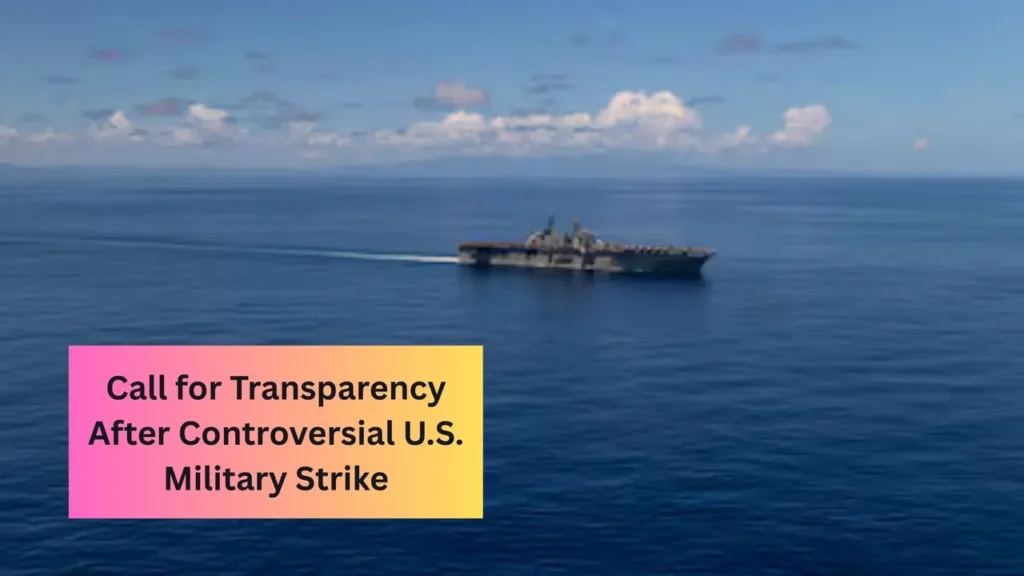
Was the target a real threat to global security, or did something go terribly wrong? That uncertainty has led to loud demands for transparency — people want the full story, not just a headline.
In this article, we’ll dive into what happened, why it matters, and why this incident has become a lightning rod for accountability in military operations.
What Exactly Happened?
According to official U.S. defense reports, the strike targeted a small vessel allegedly involved in drug trafficking across international waters. The operation was described as “precision-based” and necessary for stopping illegal narcotics that fuel crime worldwide.
But here’s the twist — the aftermath didn’t seem to match the narrative.
Conflicting Reports Emerging
While military sources insisted the strike was justified, eyewitness claims and early investigative reports hint at potential misidentification. Some say the boat may not have been a drug-smuggling vessel at all.
And that simple possibility changes everything. If a civilian or inadequate target was hit, we’re looking at a case that could violate international law and human rights practices.
Why Drug Smuggling Raises Security Alarms
Before we assume guilt or innocence, it’s important to understand why the military acts swiftly against suspected smuggling operations.
The Dangerous Link Between Drugs and Terror Networks
Illegal narcotics aren’t just packaged crime — they’re often tied to violent networks that destabilize nations. Terrorist groups frequently use drug money to fuel attacks and expand operations.
So, on one level, striking a drug-smuggling boat is framed as preventing bigger attacks down the line. It’s not just a “war on drugs,” but a war on threats hiding behind them.
The Transparency Gap — Why People Are Upset
When governments carry out military missions, secrecy is often justified in the name of national security. But when civilian casualties might be involved, hiding the truth becomes unacceptable.
Lack of Evidence Creates Suspicion
The U.S. has released very limited information:
- No confirmed identities of those on board
- No public proof of drug cargo
- No video or satellite imagery shared
- No comment on whether civilians were harmed
The more gaps there are, the louder the global calls become for answers.
Accountability Matters in Modern Warfare
We live in an age where military strikes are instantly discussed worldwide. Transparency isn’t a favor — it’s an expectation.
If the U.S. wants to maintain trust as a leader in global security, it must show that the rule of law applies even in combat situations.
International Law and the Rules of Engagement
When Is a Strike Legally Justified?
Under international maritime law, any military action must meet strict conditions:
- Clear identification of the threat
- Proof of illegal activity or armed risk
- Proportional use of force
- Duty to prevent unnecessary harm
If any of these are missing, the strike becomes questionable.
Civilian Protections Are Not Optional
Even in war — and especially outside active war zones — civilians must be protected. Misidentifying a vessel could be seen as negligence or unlawful aggression.
Human Rights Groups Step Into the Spotlight
Several human rights organizations have demanded an immediate, independent investigation.
What They Want to Know
- Who authorized the strike?
- What intelligence was used?
- Why wasn’t the boat intercepted instead of destroyed?
- Were survivors rescued or questioned?
These groups fear that without pressure, the incident might be swept under the rug — a story buried, not solved.
Families and Local Communities Seek Answers Too
If the people onboard were civilians, families deserve truth and justice. This isn’t just a geopolitical issue — it’s a human one.
Imagine losing someone at sea and being told nothing more than they were “suspected criminals.” That’s the emotional core of this controversy.
Could This Incident Damage Diplomatic Relations?
Strikes in Foreign Waters Are Sensitive
This boat wasn’t attacked in U.S. territory. Acting within or near another nation’s maritime borders can create tension, spark disputes, or even fuel anti-American sentiment.
Allies want reassurance. Rivals see an opportunity. And neutral countries weigh their own fears of sovereignty violations.
A Political Ripple Effect
Diplomats now must answer tough questions:
- Can similar strikes occur again?
- How can countries trust U.S. intelligence?
- What compensation will be offered if mistakes are proven?
The Bigger Debate — Military Oversight
This incident has reopened a familiar debate: How much independence should militaries have?
Should Congress Do More?
Some lawmakers argue that military operations, especially those carried out without wartime authorization, should undergo deeper review.
Others worry that too much oversight could slow decisions needed to preserve national security. It’s a delicate balancing act — security vs. accountability.
The Role of Media — Searching for the Truth
Journalists worldwide are digging into this story. But without transparency, they’re forced to rely on unofficial sources, leaked details, and survivor accounts.
Information Should Not Be a Battlefield
The public deserves facts, not fragments. When governments remain silent, rumors grow — and trust shrinks. The media is now the bridge trying to connect both sides of the narrative.
What Could the U.S. Do Right Now?
To reduce public outrage and global concern, there are some logical options:
Release Investigative Findings
Any internal review should be made public with proper documentation.
Invite Neutral Observers
International oversight can help prove whether the strike followed the rules.
Compensate Victims If Errors Occurred
Acknowledgment and reparation would show responsibility — not weakness.
These actions might not erase the strike, but they can rebuild trust.
A Wake-Up Call for Future Missions
This incident highlights a bigger lesson: Modern military technology moves fast, but ethics and communication must move with it.
Precision Isn’t Just About Weapons
It’s also about decisions — precision in intelligence, precision in judgment, and precision in responsibility.
Governments must remember: every strike leaves behind witnesses, consequences, and sometimes grieving families who deserve answers.
Why Transparency Is the Only Path Forward
People are not angry because a strike happened. They’re angry because no one is explaining it clearly. Transparency isn’t about blaming — it’s about learning.
Without truth, fear and mistrust fill the space. And no nation benefits from that.
Conclusion: The World Deserves Clarity, Not Confusion
The controversial U.S. military strike on a suspected drug-smuggling boat should not be hidden behind silence. Whether it was a justified hit or a tragic misjudgment, the responsibility to explain lies with those who pulled the trigger — or those who commanded it.
We all know security threats exist. We know tough decisions happen in dangerous environments. But when lives are at stake, openness and accountability must be the rule, not the exception.
Transparency doesn’t weaken national defense — it strengthens global trust.
Right now, millions are waiting for answers. And the longer those answers are delayed, the louder the demands will become.
FAQs
1. Why is this U.S. military strike considered controversial?
Because there are conflicting reports about whether the boat was truly involved in drug-smuggling and whether civilians were harmed.
2. What are human rights groups demanding?
An independent investigation, release of evidence, and accountability if wrongdoing is found.
3. How does international law apply here?
Military action in international waters must follow strict rules to ensure targets are real threats and civilian harm is minimized.
4. Could this incident impact global relations?
Yes. Nations may question U.S. intelligence accuracy and respect for maritime sovereignty.
5. What would help resolve the situation?
Transparency — including public documentation, third-party review, and compensation in case of mistakes.