
If you’ve been hunting for a memory-boosting supplement lately, chances are the name MemoTril has popped up somewhere—maybe in an ad, a social media post, or one of those too-good-to-be-true “medical breakthrough” landing pages. But the burning question remains: Is MemoTril legit or just another supplement scam wearing a white coat?
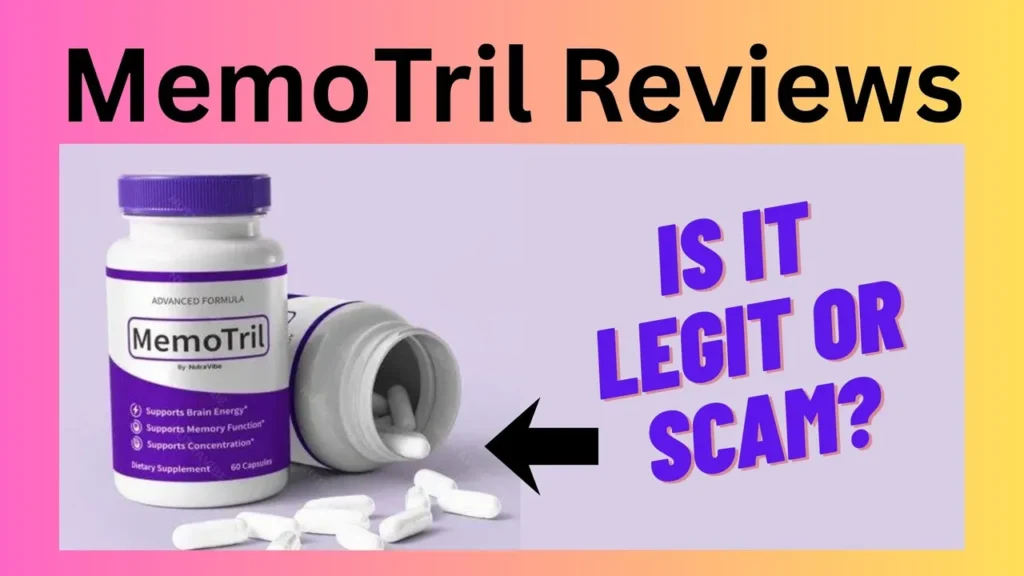
In this in-depth review, I’ll walk you through everything—how it claims to work, the red flags, the ingredients (or lack thereof), customer experiences, and whether you should trust it. Let’s dive in.
What Is MemoTril?
MemoTril is marketed as a nootropic supplement designed to improve memory, focus, mental clarity, and overall brain performance. You’ll often see it advertised as the “#1 doctor-recommended cognitive booster” or “the breakthrough Harvard scientists are calling life-changing.”
Sounds fancy, right?
But when you peel back the layers, the picture becomes a lot more blurry.
How Does MemoTril Claim to Work?
MemoTril promotes itself as a supplement that:
- Enhances memory recall
- Boosts focus and mental clarity
- Supports brain cell regeneration
- Reduces age-related cognitive decline
- Increases alertness and overall brain energy
On the surface, these claims sound impressive. But here’s the catch: there’s very little verified evidence backing these promises.
The marketing heavily relies on bold statements, not solid clinical research.
Checking MemoTril’s Ingredient Transparency
One of the biggest tests of supplement legitimacy is ingredient transparency. So, how does MemoTril score here?
Missing Full Ingredient List
Most reputable supplements provide:
- A full ingredient label
- Dosages
- Clinical references
- Possible side effects
MemoTril?
Not quite. The product’s official pages usually list vague phrases like:
- “Advanced brain blend”
- “Clinically proven memory compound”
- “Natural cognitive complex”
But these aren’t real ingredients—just marketing fluff.
Lack of Dosage Info
Even when ingredients are mentioned, the exact dosages are not. That’s a red flag because underdosed ingredients won’t give real results, and overdosed ones could be unsafe.
Fake Scientific Claims
Some sales pages mention “Harvard neuroscientists” or “MIT research,” but no official study links MemoTril to these institutions.
That’s another telltale sign of a scam.
Is MemoTril FDA Approved?
No.
MemoTril is not FDA approved, which is common for dietary supplements. But what makes it problematic is that the company sometimes falsely implies approval, which is highly misleading.
The FDA does not approve supplements—only investigates safety issues. Pretending otherwise is deceptive marketing.
Customer Reviews: Real or Manipulated?
If you search for MemoTril reviews, you’ll find:
- Overly positive comments
- Fake testimonial photos
- “Before and after” stories that look like stock images
- Repetitive wording across different sites
This usually happens when the brand itself plants fake reviews online.
Negative Reviews Are Hard to Find
And that’s another red flag. Every real product gets mixed reviews, but MemoTril appears oddly flawless—in ways that feel manufactured.
Complaints on Forums
On independent platforms, however, you may find complaints about:
- Never receiving the product
- Being charged multiple times
- Auto-billing scams
- Difficulty canceling subscriptions
- Customer service not responding
These experiences suggest the company may rely on aggressive billing practices rather than genuine supplement quality.
Is MemoTril a Subscription Trap?
Several users report that once you enter your card details, you’re automatically enrolled in a monthly auto-ship program, often without clear disclosure.
This practice—known as a continuity scam—is common among shady supplement brands.
Red Flags That Suggest MemoTril May Be a Scam
Here’s a clear breakdown:
1. No Verified Company Information
The brand doesn’t clearly disclose:
- Company name
- Manufacturing address
- Business registration details
A legit brand always provides this.
2. No Third-Party Testing
Reputable supplements undergo third-party lab testing for purity and safety.
MemoTril offers no such documentation.
3. Fake Celebrity Endorsements
Some pages show endorsements from:
- Elon Musk
- Dr. Oz
- Bill Gates
- Joe Rogan
Let’s be real:
None of them promotes MemoTril.
4. Unrealistic Marketing Claims
Any supplement claiming to “regrow brain cells overnight” or “reverse memory loss instantly” definitely crosses into scam territory.
5. Poor Quality Website
Several sales pages look rushed and unprofessional, often filled with:
- Typing errors
- Stock images
- Fake countdown timers
- “Only 3 bottles left” gimmicks
Classic scam tactics.
Does MemoTril Have Any Proven Benefits?
Without transparent ingredients, clinical studies, or real customer testimonials, it’s impossible to verify whether MemoTril works at all.
Even if it contains common nootropic ingredients like:
- Ginkgo Biloba
- Bacopa Monnieri
- Omega-3s
- Phosphatidylserine
…we can’t know if they’re present in effective doses.
So, any claims of benefits remain unproven.
Is MemoTril Safe to Use?
Because the ingredients and dosages are unclear, potential safety risks may include:
- Headaches
- Digestive issues
- Anxiety or jitteriness
- Allergic reactions
- Interaction with medications
Safety depends on transparency, and MemoTril fails that test.
If you have medical conditions or take medication, never take a mystery supplement.
Better Alternatives to MemoTril
If you’re serious about enhancing brain performance, consider reputable and science-backed brands instead.
1. NooCube
A well-known nootropic with transparent ingredients and strong user reviews.
2. Mind Lab Pro
Clinically tested and widely respected in the nootropic community.
3. Performance Lab Mind
Minimal, clean ingredients with evidence-based benefits.
These brands offer:
- Full transparency
- Third-party testing
- No subscription traps
- Worldwide customer trust
Who Should Avoid MemoTril?
You should avoid MemoTril if you:
- Need safe, proven supplements
- Want transparent ingredient labels
- Don’t like auto-billing traps
- Have medical conditions
- Take medications
- Prefer brands with scientific backing
Basically, MemoTril isn’t ideal for anyone wanting a trustworthy product.
How to Spot Fake Brain Supplement Scams
MemoTril isn’t the only questionable supplement out there. Here’s how to protect yourself:
1. Look for full ingredient lists
If it says “proprietary blend,” be cautious.
2. Check for clinical study links
Real studies should be verifiable.
3. Avoid time-pressure tactics
“Limited supply” or “offer expires in 5 minutes” are scam alerts.
4. Don’t fall for celebrity faces
Scammers often steal celebrity photos to boost credibility.
5. Research the company
If the company name is hidden, walk away.
Final Verdict: Is MemoTril Legit or a Scam?
After analyzing all the facts, MemoTril appears to be highly suspicious and likely a scam.
The lack of ingredient transparency, fake marketing tactics, sketchy billing practices, and fabricated reviews all point toward a product designed more for profit than for brain health.
If you’re looking for a real cognitive enhancer, you’d be better off choosing established nootropic brands with clinical research backing their formulas.
MemoTril simply doesn’t pass the legitimacy test.
Conclusion
MemoTril promises big results but fails to back them with real science, transparency, or trustworthy customer feedback. While the idea of a “super memory pill” is attractive, supplements like MemoTril remind us that not everything online is what it seems.
When it comes to your brain health, choose brands that value honesty, research, and safety. MemoTril doesn’t seem to offer any of those—and that makes it a risky choice.
FAQs
1. Is MemoTril safe to take?
Since the brand doesn’t reveal its full ingredient list or dosages, it’s impossible to confirm its safety.
2. Does MemoTril really improve memory?
There is no scientific evidence or verified customer proof showing that MemoTril improves memory.
3. Is MemoTril FDA approved?
No, MemoTril is not FDA approved, and the company sometimes falsely implies it is.
4. Can I get a refund for MemoTril?
Many users report difficulty getting refunds or even contacting customer service, which suggests refund issues.
5. What are some safer alternatives to MemoTril?
Reliable alternatives include NooCube, Mind Lab Pro, and Performance Lab Mind.