
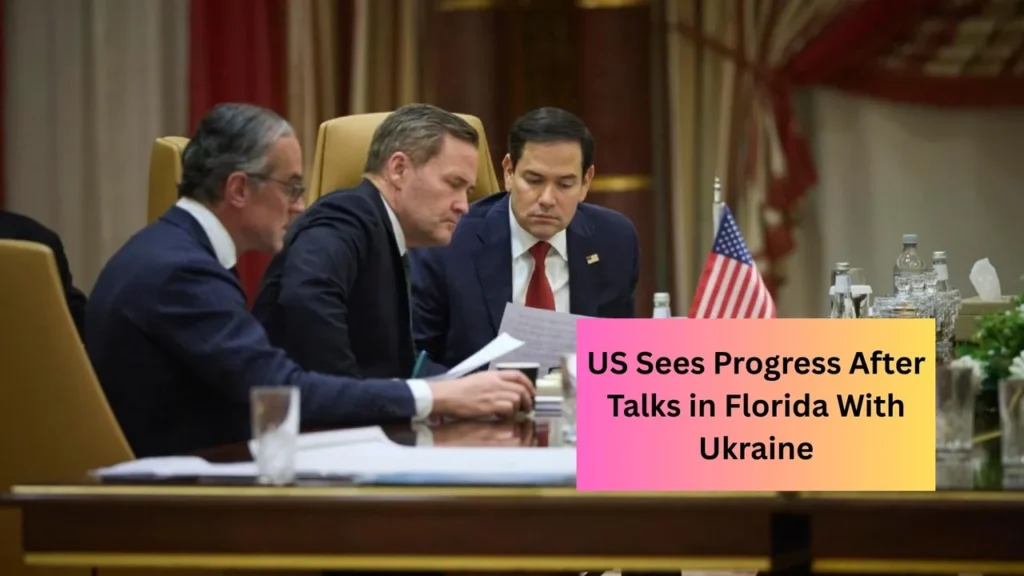
The geopolitics between the United States and Ukraine has been a hot topic for years, but the latest round of discussions in Florida has stirred fresh conversations around diplomacy, military support, and future cooperation. When the US announced that it “sees progress” after the Florida talks with Ukraine, many people naturally wondered—what exactly changed? What progress are we talking about? And why now?
In this in-depth, human-style article, we’ll break everything down in simple language. No jargon. No complexity. Just straight-up clarity.
Let’s dive in.
What Sparked the US-Ukraine Talks in Florida?
The meeting didn’t happen out of nowhere. With the ongoing conflict affecting Ukraine’s security and global stability, the US felt it needed to revisit its commitments. Florida became the chosen spot—a quiet yet strategic location for open and honest conversations.
So, what made these talks important? Well, both nations needed to align their priorities again. A lot has changed since the first days of the conflict, and the US wanted updated clarity on what Ukraine needs now.
Why Florida as a Meeting Point?
You might wonder—why Florida? Why not DC or Kyiv?
Florida, surprisingly, has become a preferred location for certain strategic diplomatic talks. It allows privacy, reduced political noise, and a neutral-feeling environment. Leaders can speak more freely away from the usual pressure cooker of Washington.
In short, Florida offered calm for tough conversations.
The Main Agenda of the Talks
The discussions covered a wide range of issues, but here are the key talking points:
1. Military Support
Ukraine still requires military assistance to defend itself, but how much and what type?
The talks focused on:
- Long-range defense systems
- Ammunition supply
- Training programs for Ukrainian forces
The US doesn’t want to overstep, but it wants to help Ukraine stay strong.
2. Economic Stability
War drains resources, and Ukraine needs financial stability to keep its economy alive. The US reviewed:
- Emergency funding
- Infrastructure rebuilding
- Long-term economic cooperation
Think of it like giving someone tools to rebuild after a storm—not just a temporary shelter.
3. Security Guarantees
Another important theme was future security. Ukraine wants assurance. The US wants a clear plan. Both sides aimed to find middle ground on future commitments.
4. Political Cooperation
Political strategies matter just as much as military ones. Discussions included:
- War accountability
- Strengthening democratic institutions
- Support for Ukraine’s government stability
What Progress Did the US See?
The highlight of the whole meeting was the US saying it “sees progress.” But what does that even mean?
Let’s break it down.
1. Unified Vision
For the first time in months, both nations came out with a refreshed, more unified vision. They agreed on short-term steps and long-term goals.
2. Renewed Commitments
The US walked away confident that Ukraine was committed to the strategic plan laid out—which made Washington more comfortable with extending additional support.
3. Clear Expectations
Both sides clarified their expectations. No ambiguity. No misunderstandings. And in diplomacy, that’s half the battle.
4. Strengthened Diplomatic Relations
Talks weren’t strained. They were productive. That alone is a major milestone when discussing international conflicts.
Why Does This Progress Matter to Ukraine?
For Ukraine, every ounce of support counts. Progress in talks means:
- More military support
- More financial help
- More global backing
- More confidence among its citizens
In a conflict, morale and partnerships often matter as much as weapons.
Why Does the US Consider These Talks Successful?
From the US perspective, progress means:
1. A More Stable Europe
A stronger Ukraine equals a more stable Europe. That’s a major US interest.
2. Protecting Democratic Values
Supporting Ukraine aligns with US goals of upholding democracy worldwide.
3. Preventing Expansion of Conflict
If Ukraine is strong, the conflict is less likely to spill into other countries.
4. Maintaining Global Leadership
The US wants to remain a key player in resolving global issues—this meeting reinforced that role.
What Challenges Still Remain?
Let’s be honest—not everything is sunshine and rainbows. A few major challenges remain:
1. Funding Approval in the US Congress
Not everyone in Congress agrees on supporting Ukraine. This complicates future aid packages.
2. Escalation Risks
Any increased support has the potential to escalate tensions. The US must walk a fine line.
3. Ukraine’s Internal Pressure
Ukraine is fighting on multiple fronts—political, economic, and military. This puts stress on its leadership.
4. Long-Term Uncertainty
There’s no clear end date to the conflict. Both nations must plan for the long haul.
How the Talks Shape Future US-Ukraine Relations
This Florida meeting could very well become a turning point. Here’s how:
Strengthened Trust
Trust is the backbone of any partnership. These talks strengthened that bond.
Clearer Roadmap
Both countries now know what to do next, step by step.
Greater Transparency
Future discussions will likely be more open and efficient.
More Support Opportunities
If progress continues, the US may expand its military and economic support.
The Global Reaction to the Florida Talks
The world was watching. And reactions poured in quickly.
From Europe
European nations welcomed the news, as stability in Ukraine directly affects them.
From NATO
NATO praised the meeting and encouraged continued cooperation.
From Russia
Russia criticized the talks—no surprise there—as increased support for Ukraine goes against its interests.
From Global Media
Media globally described the meeting as “productive,” “important,” and “strategic.”
How Does This Impact Ordinary Ukrainians?
You’d be surprised, but international talks affect daily life more than we think.
1. Boosted Morale
People feel more hopeful knowing the world hasn’t forgotten them.
2. Increase in Aid
Military and economic aid help stabilize communities.
3. Longer-Term Security
The more solid the international support, the safer Ukraine becomes.
How Does This Impact Americans?
This isn’t just a Ukraine issue; Americans also feel the effects.
1. Strengthened Global Leadership
It reinforces America’s role as a global leader.
2. Safer International Alliances
Stable allies help ensure America’s long-term security.
3. Economic Opportunities
Long-term rebuilding efforts in Ukraine may open future business partnerships.
What Happens Next?
The next steps include:
- Follow-up meetings
- Aid review
- Security planning
- Diplomatic visits
- Congressional debates on funding
In short, the Florida talks were step one. Now comes the action.
Is This a Turning Point for the Conflict?
Maybe. Maybe not. But it’s definitely a positive shift. When two key partners walk out of a room saying they “see progress,” it usually signals movement in the right direction.
Is it a solution? Not yet.
Is it hope? Absolutely.
Conclusion
The US seeing progress after the Florida talks with Ukraine is more than just a diplomatic headline. It’s a moment of renewed partnership, strengthened trust, and clearer pathways toward stability. While challenges still exist, the progress made in Florida proves that meaningful dialogue can still move mountains—even during a global crisis. Whether this leads to a long-term breakthrough remains to be seen, but for now, it brings much-needed optimism to an ongoing conflict that has impacted millions.
FAQs
1. What was discussed in the Florida meeting between the US and Ukraine?
They discussed military aid, economic support, security guarantees, and long-term cooperation.
2. Why did the US say it “sees progress”?
Because both countries aligned better on goals, commitments, and next steps.
3. How does this impact Ukraine’s security?
Progress in talks means enhanced support, better strategic planning, and stronger international backing.
4. Are more talks expected soon?
Yes. The Florida meeting was just one step. More discussions are planned in the coming months.
5. Will this change US policy toward Ukraine?
Not drastically, but it strengthens cooperation and increases the likelihood of continued or expanded support.