
The COP30 Climate Summit arrived with sky-high expectations. After years of warnings from scientists, mounting pressure from activists, and recurring climate disasters, the world wanted bold action. And while COP30 didn’t disappoint entirely, it didn’t fully deliver either. Think of it like ordering a grand meal but receiving a plate that’s only half full—you appreciate what’s there but can’t ignore what’s missing.
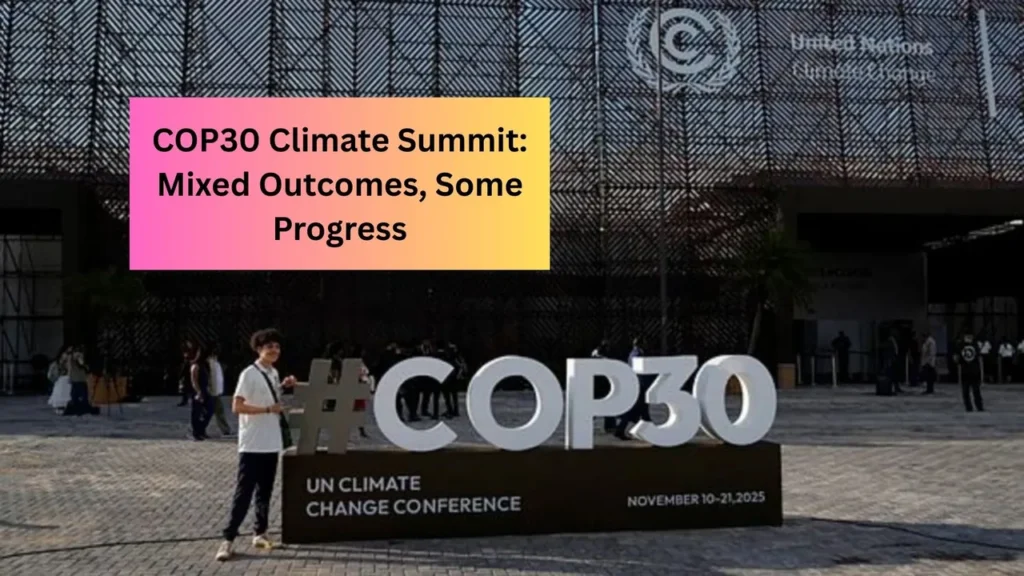
In this article, we’ll break down the mixed outcomes, highlight the real progress, and unpack what COP30 means for climate action moving forward.
What Was COP30 All About?
COP30 was the latest annual meeting of global leaders under the United Nations Climate Change Framework Convention (UNFCCC). This is where countries come together to negotiate climate commitments, review progress, and set new targets.
Why COP30 Mattered More Than Ever
Climate change indicators in the past few years have been alarming—record-breaking temperatures, extreme weather events, rising sea levels, widespread wildfires, and shrinking ice sheets. The urgency was clear: the world needed a stronger set of commitments.
The Overall Result: Not a Failure, Not a Breakthrough
Like many past COP summits, COP30 produced mixed results. There was progress, but not at the scale scientists say is needed to keep global warming under control.
You might be wondering—how can something be both good and bad at the same time? Well, imagine fixing a leaking tap while your house is flooding. Yes, the repair helps, but you still have bigger issues to tackle.
Major Highlights of COP30
Let’s dive into the most important takeaways.
1. Stronger National Climate Pledges (NDCs)
Countries were encouraged to update their Nationally Determined Contributions (NDCs) with more ambitious targets.
What Improved?
Many major emitters committed to slightly deeper emissions cuts by 2035. This included promises to phase down coal, scale up renewables, and cap methane emissions.
What’s Missing?
The commitments still fall short of the Paris Agreement goal of limiting warming to 1.5°C. Scientists call the current pledges “too slow for the pace of warming.”
2. Financing for Climate Vulnerable Nations
This was one of the most discussed topics before the summit.
The Good News
Developed nations agreed to increase contributions to the Loss and Damage Fund, providing financial support to nations hit hardest by climate disasters.
It’s a step many countries—especially small island states—have been demanding for years.
The Not-So-Good News
The fund is still under-resourced. Contributions are voluntary, not mandatory. And there are concerns about how quickly and effectively the money will reach the nations that need it.
3. Fossil Fuel Phase-Out Debate: Still No Consensus
If there was one big disappointment, it was this.
The Debate
Countries fiercely debated whether COP30 should commit to a full fossil fuel phase-out or just a phase-down.
The Outcome
The final agreement used ambiguous language, calling for a “transition away from unabated fossil fuels.”
Many experts argue this wording leaves too much room for interpretation.
4. Renewable Energy Targets Gain Momentum
Perhaps the clearest area of progress was the bold push toward renewable energy.
Global Renewable Energy Goal
Countries collectively agreed to triple global renewable energy capacity by 2035.
This includes solar, wind, hydro, and emerging technologies.
Why This Matters
Tripling renewable capacity is one of the strongest levers available to cut global carbon emissions at scale.
5. Methane Reduction Takes Center Stage
Methane is a super-charged greenhouse gas—much more powerful than CO₂ in the short term.
Stronger Commitments
Several nations pledged to significantly reduce methane leaks from oil, gas, agriculture, and waste sectors.
But…
Major methane emitters still didn’t commit to aggressive policies, leaving important gaps.
The Push for Climate Adaptation
Climate change isn’t just about preventing damage—it’s also about adapting to what’s already happening.
Adaptation Targets Expanded
For the first time, the summit adopted clearer global adaptation goals.
Examples of Adaptation Measures
- Building climate-resilient infrastructure
- Investing in early-warning systems
- Enhancing drought-resistant crops
- Improving coastal protection
This may sound technical, but think of it like preparing your home for a storm—reinforcing windows, securing the roof, and planning safe evacuation routes.
Technology and Innovation: A Brighter Spot
Technology was one of the few areas where optimism was widespread.
H3. Green Tech at the Center Stage
From carbon capture to AI-driven climate solutions, COP30 showcased innovations pushing the boundaries of sustainability.
Key Technologies Featured
- Advanced solar panel storage
- Carbon capture and storage (CCS)
- Climate-smart agriculture tools
- Next-generation electric mobility
Voices That Shaped the Summit
No global summit is complete without passionate voices demanding accountability.
Youth groups were loud and clear—calling for an end to fossil fuels, not vague promises.
Their chant remained the same: “If not now, when?”
Indigenous Communities
Indigenous leaders emphasized the need for:
- Forest conservation
- Recognition of land rights
- Protection of biodiversity
They reminded delegates that indigenous knowledge is a powerful tool in climate preservation.
Scientists and Researchers
Climate scientists continued to ring the alarm bells with fresh data showing warming trends accelerating.
Their message? “We’re running out of time.”
Where COP30 Fell Short
While progress was made, several shortcomings stood out.
1. No Binding Fossil Fuel Phase-Out Agreement
A stronger, clearer commitment was expected—but didn’t materialize.
2. Insufficient Climate Finance
The promised billions still fall short of the trillions needed annually for global climate action.
3. Slow Progress in Climate Adaptation Funding
Developing nations said the pledges were far below expectations.
The Political Reality Behind the Mixed Outcomes
Why are climate decisions always so complicated?
1. National Interests Clash
Some countries depend heavily on fossil fuels for their economy.
2. Geopolitical Conflicts Slow Consensus
Global tensions make multilateral agreements harder.
3. Economic Concerns
Transitioning to cleaner systems requires big upfront investments.
Think of it like renovating an old house—you know it’s the right thing to do, but it takes money, time, and patience.
What COP30 Means for the Future
Even with its limitations, COP30 set the stage for renewed climate conversations.
Renewables Will Keep Rising
The decision to triple renewable capacity could transform energy industries worldwide.
Pressure Will Grow for Fossil Fuel Phase-Out
Activists and experts are already gearing up for COP31, demanding stronger commitments.
Climate Finance Will Stay a Battleground
How much money? Who pays? How fast? These questions will dominate future negotiations.
Conclusion: A Step Forward, But Not Enough
The COP30 Climate Summit reflected exactly where the world stands today—caught between progress and hesitation. We saw encouraging steps: stronger NDCs, more funding for vulnerable regions, and an ambitious renewable energy target. Yet the lack of a clear fossil fuel phase-out and insufficient financial commitments remind us that the road to climate stability is still long and challenging.
In short, COP30 was not the breakthrough summit many hoped for—but it wasn’t a failure either. It offered hope, progress, and the promise of more determined action in the years to come. The world now waits for leaders to turn their pledges into real, measurable climate action.
FAQs
1. What is the main goal of COP30?
COP30 aims to strengthen global climate commitments, update national targets, and push for faster action to reduce greenhouse gas emissions.
2. Did COP30 agree on phasing out fossil fuels?
Not fully. The agreement only mentioned transitioning away from “unabated fossil fuels,” leaving room for interpretation.
3. Was there progress in renewable energy?
Yes, countries agreed to triple global renewable energy capacity by 2035, which is one of the summit’s strongest outcomes.
4. Did developing nations receive more climate funding?
They received more commitments, especially for the Loss and Damage Fund, but experts say it’s still not enough.
5. Why is COP30 considered a mixed outcome?
Because while there were important steps forward, many key decisions lacked the urgency required to tackle the climate crisis effectively.