
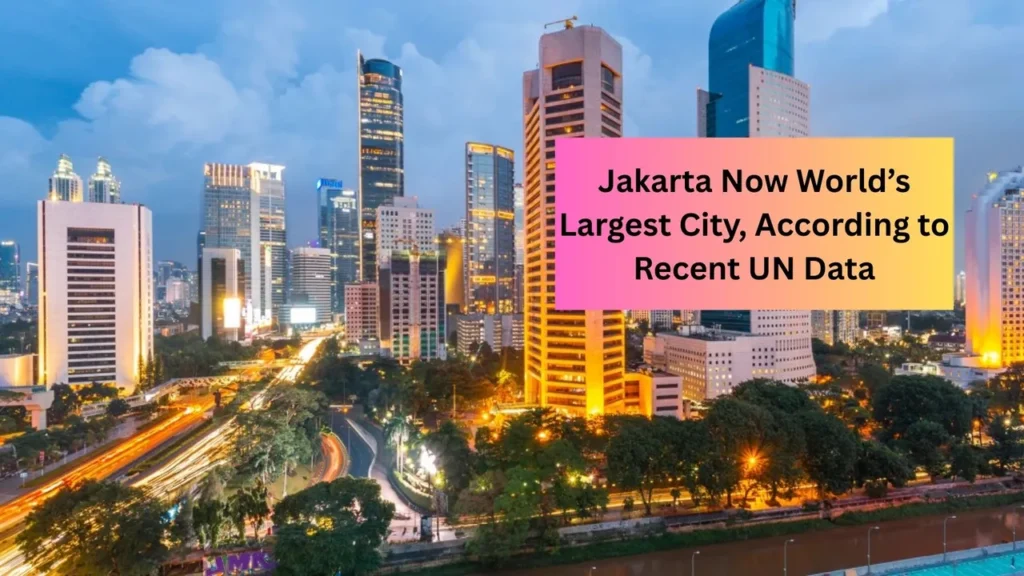
When you think about the world’s largest city, what pops into your mind? Tokyo? Delhi? Shanghai? Well, the script has flipped. According to recent United Nations data, Jakarta is now officially the world’s largest city—a massive shift in the global urban landscape.
In this in-depth guide, let’s break down what this new milestone really means. Is it a triumph? A warning sign? A mix of both? Today, you’ll discover how Jakarta climbed to the top, what challenges come with the title, and what the future holds for the Indonesian megacity that’s rewriting global rankings.
What Does It Mean for Jakarta to Be the World’s Largest City?
So, what does this headline-grabbing declaration actually mean? Becoming the world’s largest city isn’t just about bragging rights. It’s about population size, density, growth patterns, and urban transformation on an unprecedented scale.
According to the UN’s latest urban population data, Jakarta has now surpassed long-standing megacities in sheer population within its metropolitan area. This isn’t surprising if you’ve ever seen Jakarta’s humming streets, bustling markets, or jam-packed highways.
How Did Jakarta Become the World’s Largest City?
It didn’t happen overnight. Jakarta’s rise to the number-one spot is the result of several long-running factors.
Rapid Population Growth
Jakarta’s population has been expanding for decades. Rural-to-urban migration has played a huge role as people move in search of better opportunities.
H3: Economic Magnet
As Indonesia’s capital and economic center, Jakarta attracts businesses, industries, and millions of workers. It’s like a giant magnet pulling in talent from across the archipelago.
H3: Higher Metro Density
When the UN measures city populations, it often looks at metro or urban agglomeration size, not just administrative boundaries. Jakarta’s extended metropolitan area—Jabodetabek (Jakarta, Bogor, Depok, Tangerang, Bekasi)—is enormous.
Global Shifts in Urbanization
Cities worldwide are growing, but Jakarta’s pace has been exceptionally fast. The world is urbanizing, but Southeast Asia is urbanizing even faster.
Jakarta Surpasses Tokyo and Delhi
For years, Tokyo held the title as the world’s largest city. Delhi was predicted to take the lead this decade. But Jakarta surprised many analysts.
H3: Why Did Tokyo Lose the Top Spot?
Tokyo’s population has been shrinking due to:
- declining birth rates
- aging population
- limited immigration
Why Did Delhi Slow Down?
Delhi is still growing, but pollution, infrastructure strain, and migration shifts have slowed its pace.
Meanwhile, Jakarta kept pushing upward—despite all odds.
What Challenges Does Jakarta Face as a Megacity?
Being the world’s largest city sounds glamorous… but reality is far more complex.
Let’s talk about the elephant in the room: Jakarta’s challenges are massive, and some are unlike anything the world has seen.
Severe Traffic Congestion
If you’ve ever complained about traffic in your city, Jakarta’s congestion will make you reconsider. Some commuters spend hours traveling just a few kilometers. It’s often called one of the worst traffic situations in the world.
Urban Flooding
Jakarta is literally sinking.
Climate change, rising sea levels, and overuse of groundwater have put the city at serious risk of flooding.
Overpopulation
As population density increases, demand for housing, transportation, energy, and basic services skyrockets.
Air Pollution
Growing industries and millions of vehicles contribute to increasingly poor air quality.
Infrastructure Strain
More people means more pressure—on hospitals, schools, roads, and public utilities.
Indonesia’s Bold Plan: Moving the Capital
You might already know—Indonesia plans to relocate its capital from Jakarta to a new planned city, Nusantara, in East Kalimantan.
Why Move the Capital?
Because Jakarta is:
- overcrowded
- sinking
- prone to severe flooding
- overburdened as a political and economic center
Will This Reduce Jakarta’s Population?
Not immediately. Even if political activities shift, Jakarta will remain the country’s financial, cultural, and business heart.
Imagine Washington, D.C. vs. New York City—same idea.
The Economic Impact of Becoming the Largest City
Jakarta’s size is a double-edged sword.
Economic Advantages
- Bigger workforce
- Attractive to investors
- More business opportunities
- Massive consumer market
Economic Risks
- Infrastructure collapse
- Rising cost of living
- Inequality
- Urban poverty
When a city grows too fast without proper planning, things can get messy.
Jakarta’s Culture and Diversity Fuel Its Growth
Let’s not forget: Jakarta isn’t just big in numbers. It’s big in personality.
A Melting Pot of Indonesia
People from all over the 17,000-island nation call Jakarta home. Each ethnic group, language, and culinary tradition influences the city’s culture.
The Entertainment and Fashion Hub
From modern malls to traditional markets, Jakarta shapes Indonesia’s trends.
Tech and Startup Explosion
The city is home to major tech unicorns and thousands of startups—turning Jakarta into Southeast Asia’s rising Silicon Valley.
How the World Views Jakarta’s New Status
When the UN makes a declaration, the world listens.
Global Recognition
Jakarta is now officially on the map as the epicenter of Southeast Asian urbanization.
Investor Interest
Global companies often invest in cities with the highest population because that’s where demand is strongest.
Environmental Alarm
International urban planners and environmentalists see Jakarta as an example of what can happen when a megacity grows faster than its infrastructure.
Jakarta’s Future: What Happens Next?
Now that Jakarta is the world’s largest city, what lies ahead?
Better Infrastructure Initiatives
Jakarta is ramping up projects like:
- MRT expansion
- New toll roads
- Water management systems
- Green spaces
Smart City Transformation
Jakarta is investing in smart technology to:
- manage traffic
- improve public services
- monitor urban flooding
Balancing Growth and Sustainability
That’s the real challenge. Jakarta’s future depends on whether it can grow in a way that sustains both its people and its environment.
What Can Other Cities Learn from Jakarta?
Jakarta’s rise offers critical lessons for the world.
Rapid Urbanization Needs Planning
Cities must evolve with transportation, housing, and climate resilience in mind.
Environmental Risks Increase With Population
Ignoring climate issues can have long-term consequences.
Economic Power Isn’t Enough
A city can be rich but still struggle without proper resource management.
Conclusion
Jakarta becoming the world’s largest city marks a historic milestone—not only for Indonesia but for the entire global urban landscape. It’s a sign of the world’s shifting population dynamics and the growing influence of Southeast Asia.
But the achievement comes with challenges: congestion, pollution, flooding, and overpopulation. At the same time, Jakarta’s energy, diversity, and economic power continue to make it one of the most vibrant cities on the planet.
Will Jakarta thrive as the world’s biggest city or buckle under pressure? That depends on how well it navigates the next decade. One thing is clear: Jakarta is no longer just a city—it’s a global force.
FAQs
1. Is Jakarta really the world’s largest city now?
Yes. According to recent UN data, Jakarta has surpassed other megacities in population within its metropolitan area.
2. Why is Jakarta’s population growing so fast?
Economic opportunity, migration from rural areas, and metropolitan expansion all contribute to rapid growth.
3. Is Jakarta sinking?
Yes, parts of Jakarta are sinking due to groundwater extraction and rising sea levels.
4. Will moving the capital reduce Jakarta’s population?
Not significantly. Jakarta will remain Indonesia’s economic hub.
5. What makes Jakarta important globally?
Its massive population, booming economy, cultural diversity, and rising urban influence make it a major global city.